
Review more than the size label.
Request neck and chest adjustment ranges and compare the actual strap path.
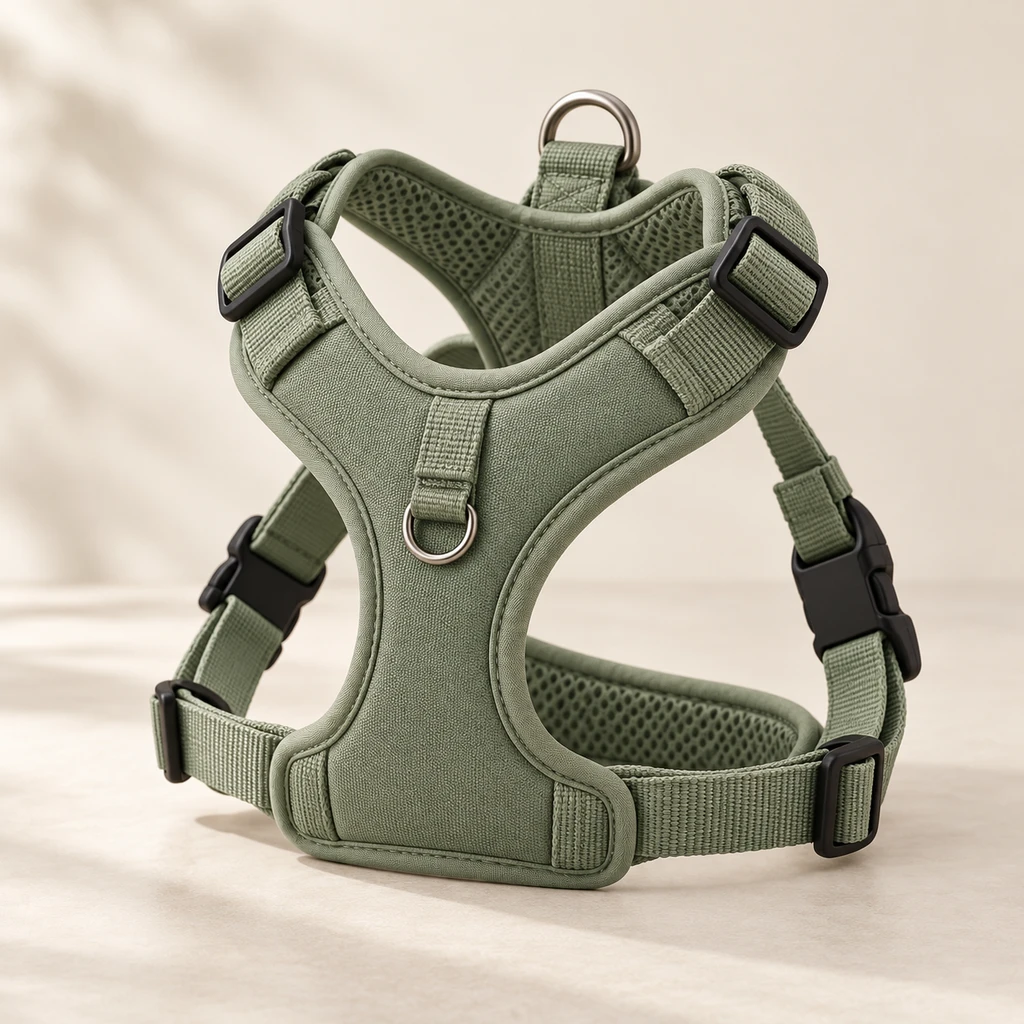
Product concept · actual configuration requires confirmation
Walking & Training ↗ · G1
An everyday walking format.
A fit-first sourcing conversation.
Discuss neck and chest adjustment, strap routing, padding and leash attachment positions. Final sizing, materials, fit and strength evidence require confirmation for the proposed model.
AI-generated concept photography throughout. Images illustrate design, use and packaging directions, not confirmed supplied models, performance or included accessories.
DESIGNED AROUND THE BRIEF
Y-front is a design direction. Actual neck, chest and strap geometry need to work together before a size range is approved.
Request neck and chest adjustment ranges and compare the actual strap path.
Agree buckle, ring and stitching requirements rather than inferring strength from the photograph.
Discuss how the harness goes on and whether the proposed buckle arrangement suits the intended users.
SPECIFICATION DISCUSSION
Review these points against a proposed model. The concept photography does not establish final materials, dimensions, availability or performance.
| Product concept | Padded Y-front walking harness with adjustable webbing |
|---|---|
| Sizing | Provide neck, chest girth and desired adjustment range |
| Materials and hardware | Confirm webbing, padding, buckles and ring construction |
| Leash attachment | Front and back ring directions illustrated; final configuration to confirm |
| Performance | No no-pull, escape-proof or load-rating performance verified |
| MOQ, branding and timing | Quoted for the proposed model and packaging requirements |
IN THEIR EVERYDAY
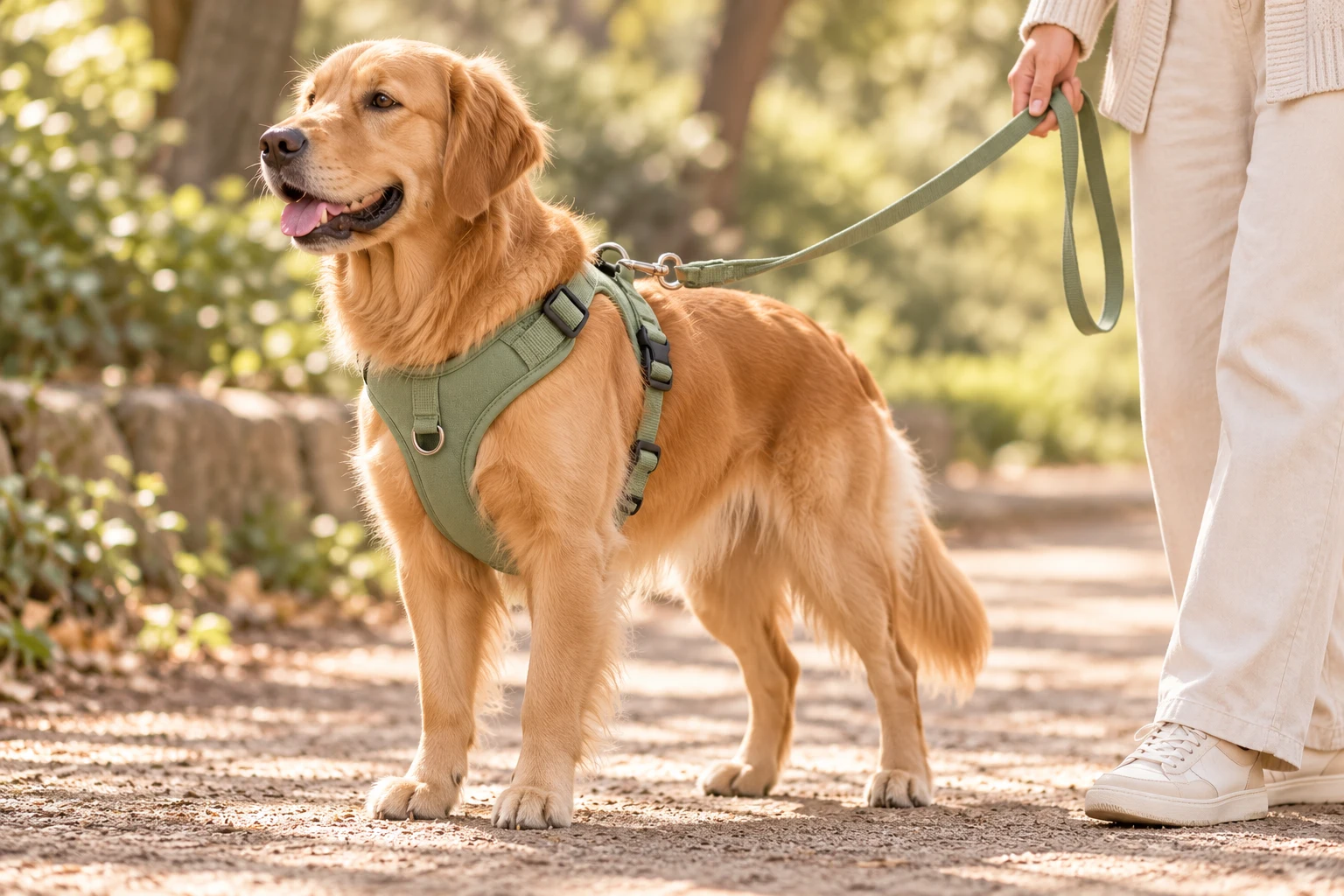
The scene illustrates a proposed walking setup. Confirm fit and the leash attachment configuration on an actual sample; no handling or safety outcome is guaranteed.
Illustrative use setting. Pets, vehicle, tray and other contextual accessories are not included as part of a confirmed supply offer.
CLOSER TO THE PRODUCT
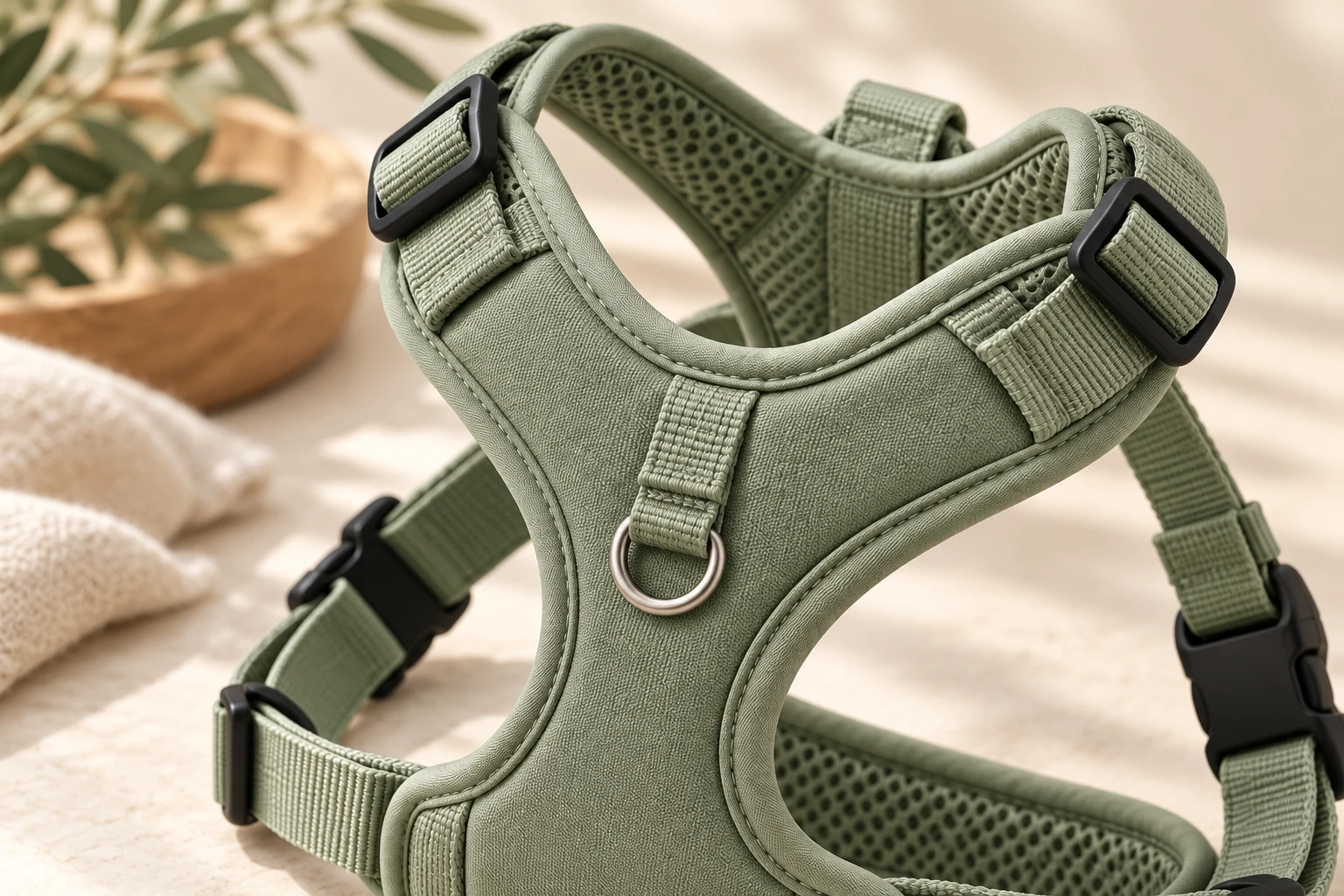
Review the actual ring placement, strap routing, stitching and buckle operation. Front and back ring positions are concept directions, not proof of a control benefit.
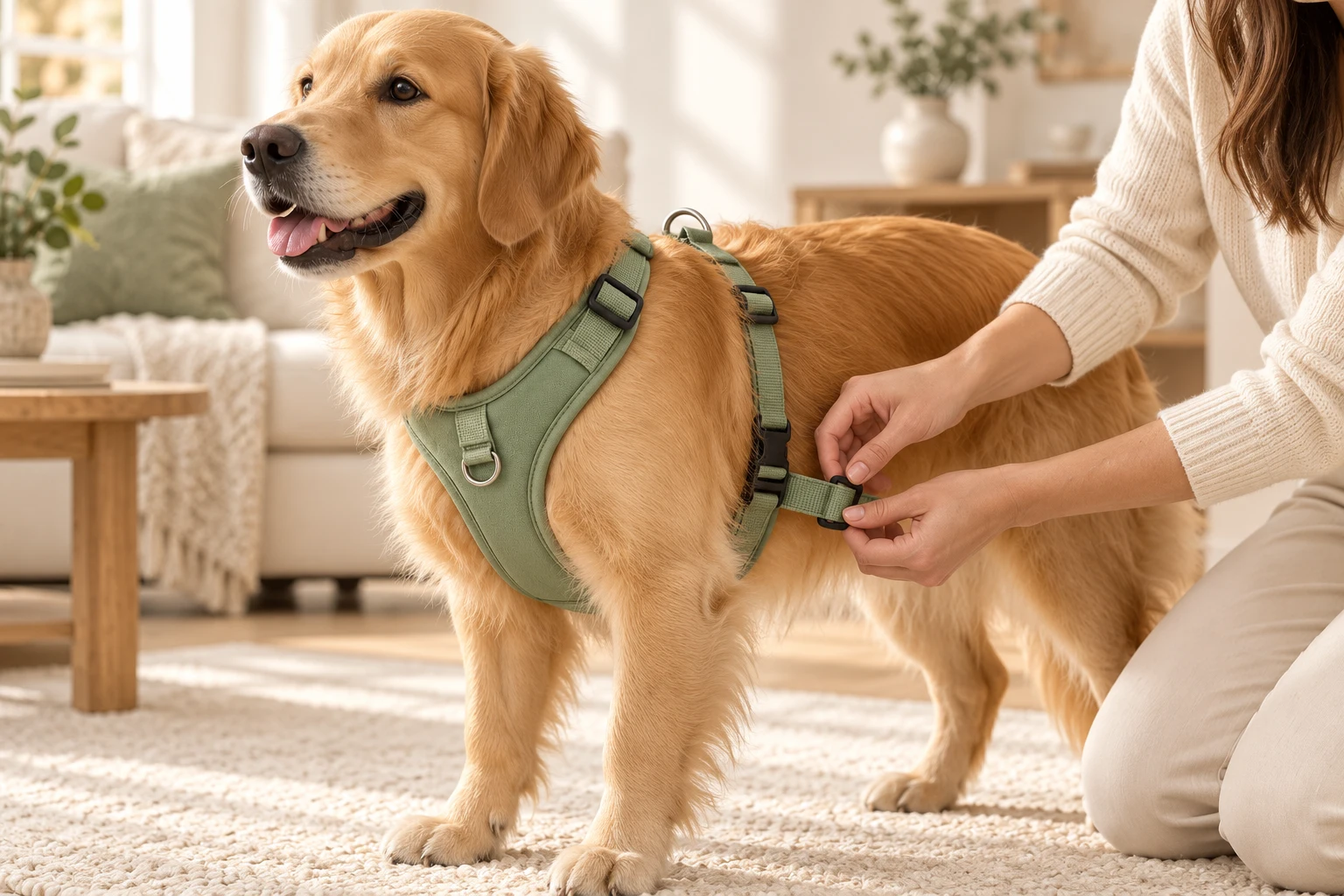
Compare the proposed neck and girth range, strap position and adjustment room. Do not describe a harness as escape-proof or universally comfortable without the relevant evidence.
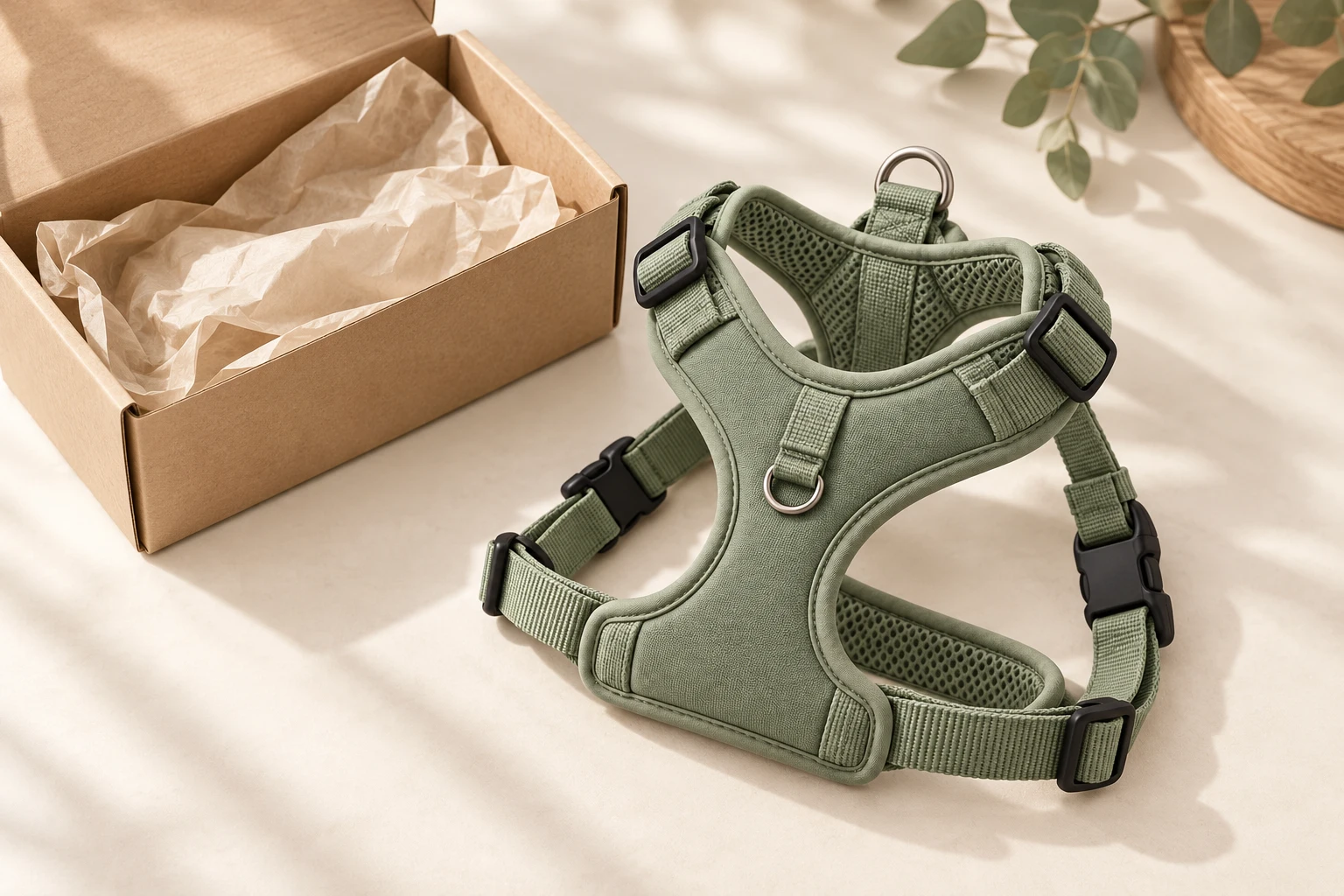
Discuss size charts, care labels, logo placement and carton packing. A leash or accessory is not confirmed as supplied.
Explore private-label support ↗Independent AI-generated photographs. Confirm construction, care instructions and packing contents against the actual proposed sample.
BEFORE PRODUCTION
Compare neck, chest and strap geometry with the intended fit range.
Inspect buckle operation, ring attachment, stitching and padding on a sample.
Confirm care instructions, size labeling and agreed strength evidence.
A Y-front places two straps on either side of the neck that meet over the breastbone. Measure chest girth behind the front legs and neck circumference along the intended strap path. Try the harness on different builds and observe shoulder motion, underarm clearance and strap movement during walking and turning. Bunched webbing or straps riding into the armpit can rub. Recheck the fit if the dog shifts backward, since a good standing fit cannot establish escape resistance.
Close the buckle with fur clear of the jaws and lay the webbing flat through each adjuster. Check for pinched hair, slipping adjustments, missed stitches, sharp edges and distortion at the lead ring. Request test conditions for the finished assembly, including the pull direction, sample size, attachment and pass criteria. Any claimed strength must apply to the same components and stitching as the offered sample.
BUYER FAQ · RECENT OWNER QUESTIONS
Recent owners compare lightweight Y-front formats, adjustment, attachment points and dislike of over-head fitting. The useful next step is a measurable fit brief and a sample review, rather than a promise that a particular shape will stop pulling.
No no-pull or training outcome is verified for this sourcing concept. The Y front describes the proposed geometry. Confirm attachment positions and fit, and do not treat the product name as a behavioral-performance claim.
Request actual neck and chest adjustment ranges and the proposed strap layout. Size labels alone are insufficient. Compare a fit sample against the intended body measurements; no breed-fit or extended size range is confirmed.
That depends on the final buckle arrangement. The illustration does not confirm a neck-opening buckle. Include your fitting-method requirement in the brief and review the actual sample before selecting it.
No escape-resistance or restraint performance is verified. A front attachment point is a component option, not evidence that a dog cannot back out. Ask for construction and fit evidence for the proposed model.
Universal suitability and comfort are not confirmed. Review padding edges, strap location, adjustment room and care instructions against the intended assortment. The product photograph cannot establish wear comfort.
Only the harness direction is listed. Ring composition, a leash and matching accessories require separate confirmation in the quotation and packing list.
Ask for the supplier's measuring points and adjustment range. Measure each sample closed at the shortest and longest settings, then confirm fit and remaining adjustment on different body shapes near size boundaries. Record sample revisions and use the verified measurements on the retail chart.
YOUR NEXT PET COLLECTION
Share your market, quantities and model-specific requirements.

LET’S BUILD SOMETHING GOOD
Share your market, quantities and product requirements.
Start your inquiry ↗