
Make support measurable.
Request the support material, panel dimensions and documented load evidence for the proposed construction.
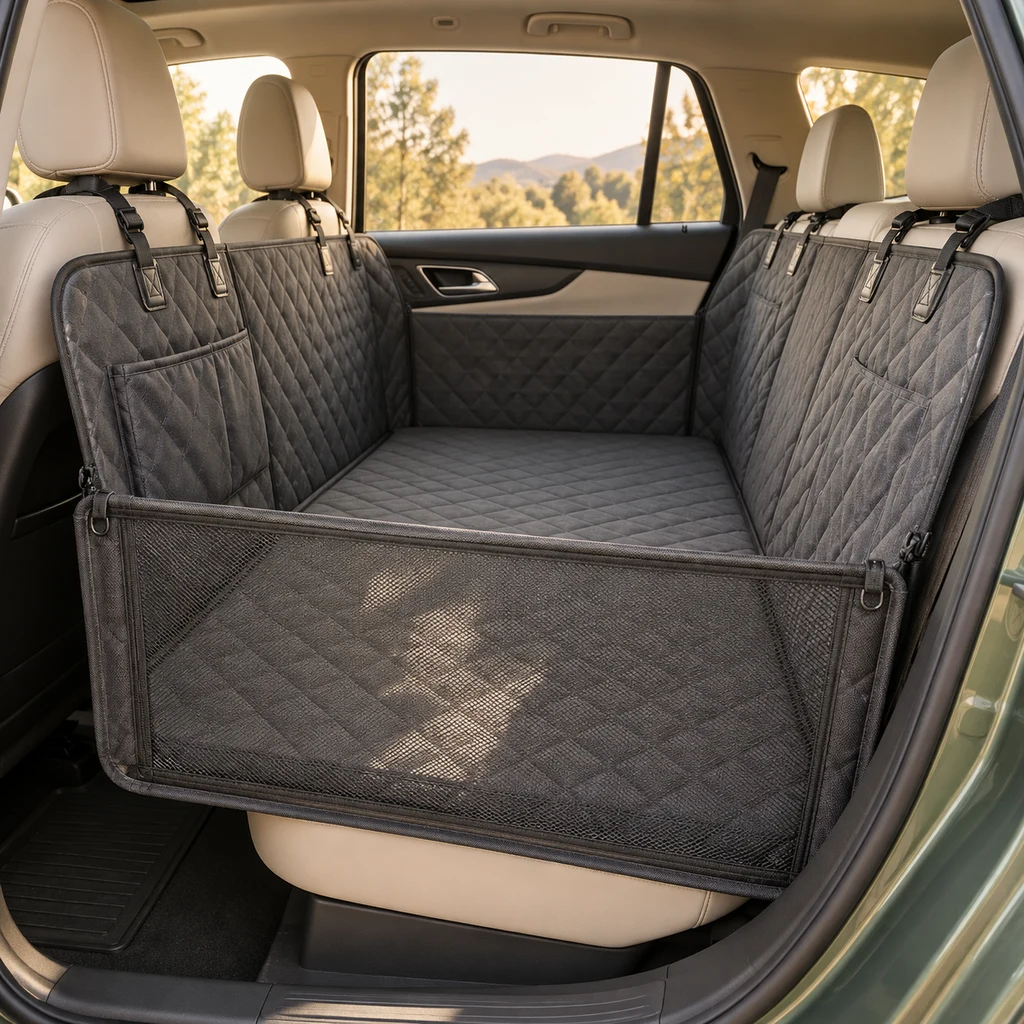
Product concept · actual configuration requires confirmation
Travel & Transport · A1
A more structured rear-seat setup.
A clearer brief for your travel range.
Explore a rear-seat hammock direction with a rigid support base, mesh panel and side coverage. Define the vehicle geometry and expected use before comparing a proposed model.
AI-generated concept photography throughout. Images illustrate design, use and packaging directions, not confirmed supplied models, performance or included accessories.
DESIGNED AROUND THE BRIEF
Fit, base construction and fixings belong in the same conversation. An attractive installed image cannot establish capacity or vehicle compatibility.
Request the support material, panel dimensions and documented load evidence for the proposed construction.
Review bench width, seat depth, front-to-rear gap, headrests and door-panel access.
Ask how the inserts, straps and cover are removed, cleaned, dried and packed between trips.
SPECIFICATION DISCUSSION
Review these points against a proposed model. The concept photography does not establish final materials, dimensions, availability or performance.
| Product concept | Rear-seat dog hammock with a rigid support base |
|---|---|
| Size and vehicle fit | Specify seat dimensions and intended vehicle types |
| Materials and base | Confirm proposed fabric, padding and base in quotation |
| Cleaning and performance | Agree care instructions and evidence for requested claims |
| Branding and packaging | Neutral, logo and packaging options subject to sourcing |
| MOQ, price and timing | Confirmed for the proposed model after your inquiry |
IN THEIR EVERYDAY
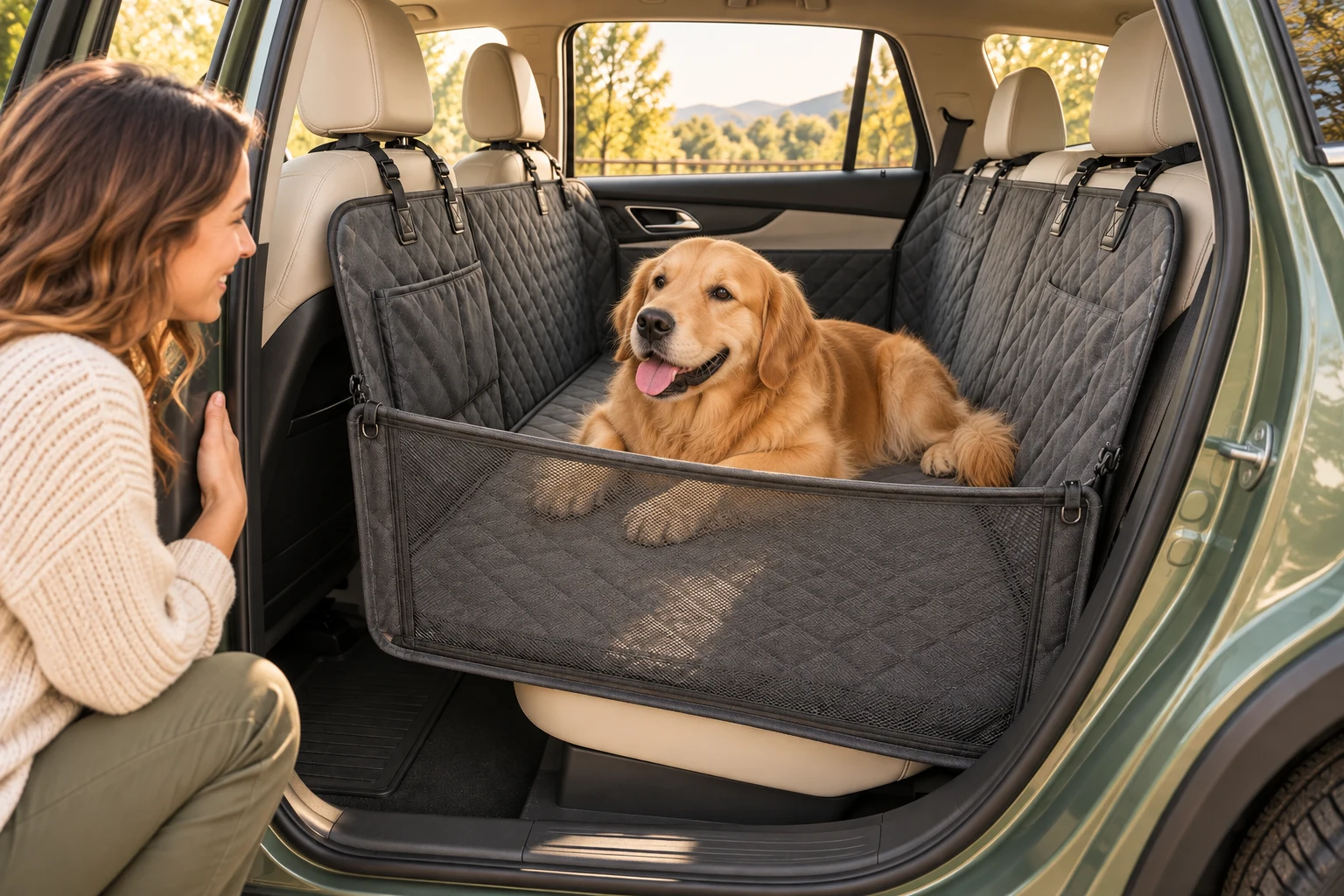
A stationary rear-seat setup illustrates the proposed coverage. Confirm fit and the separate travel-restraint arrangement before use; the hammock itself is not a verified restraint.
Illustrative use setting. Pets, vehicle, tray and other contextual accessories are not included as part of a confirmed supply offer.
CLOSER TO THE PRODUCT
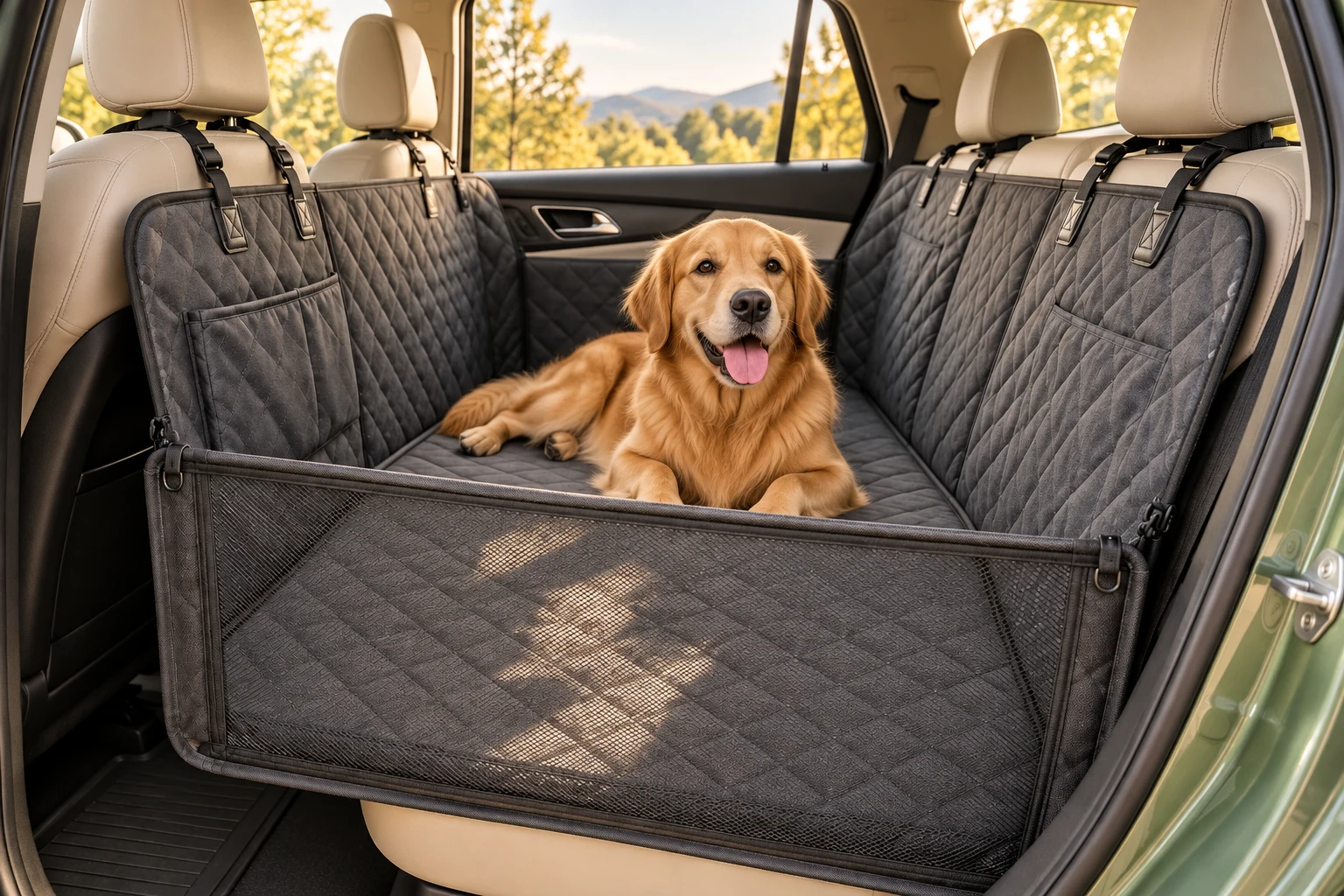
Review base support, stitching, webbing, mesh and headrest fixings as a system. Request an actual sample and load evidence; no strength or durability follows from the image.
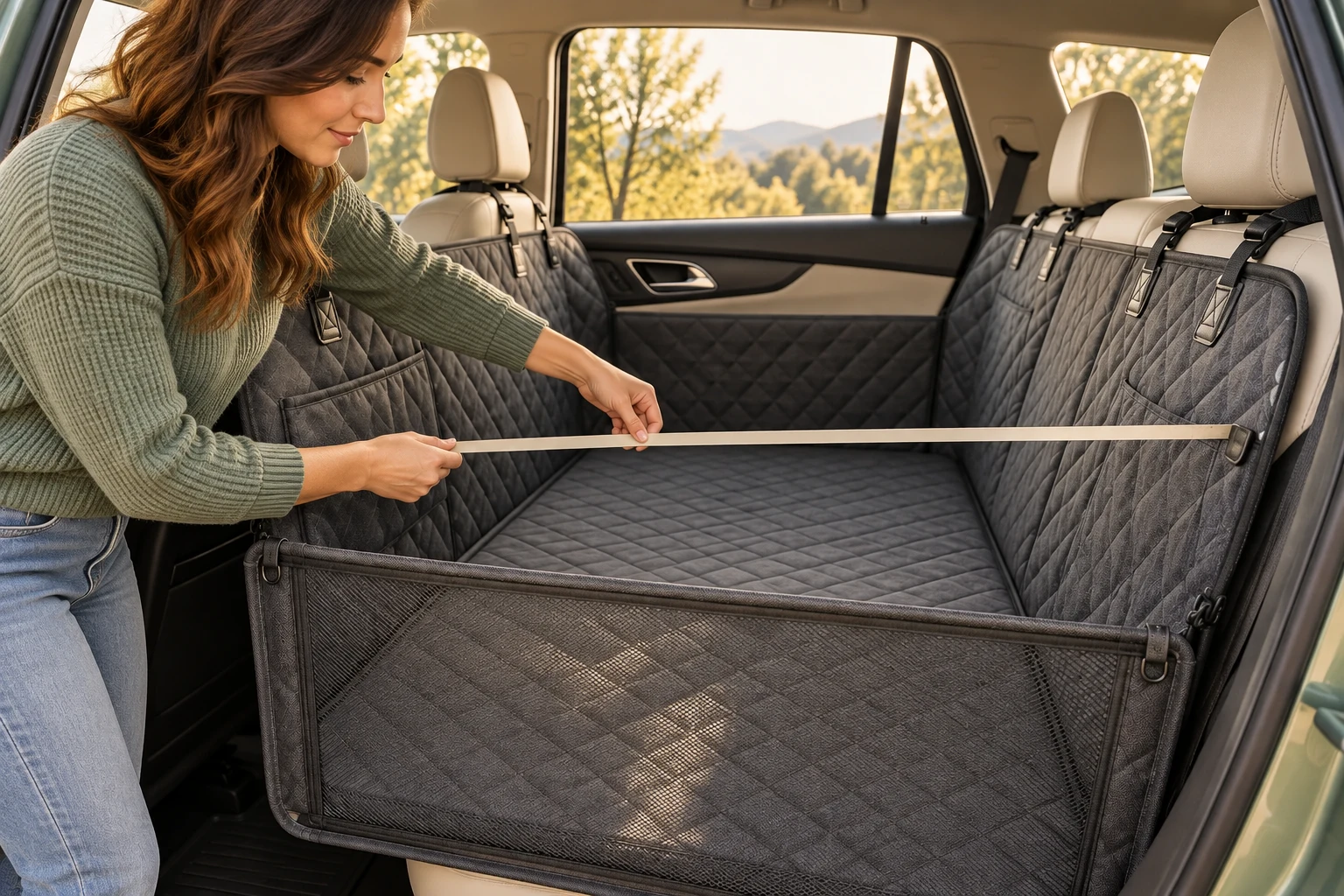
Compare the rear bench, seat gap and headrest points with the proposed pattern. Confirm access to the intended seat-belt or separate restraint hardware without assuming a universal fit.
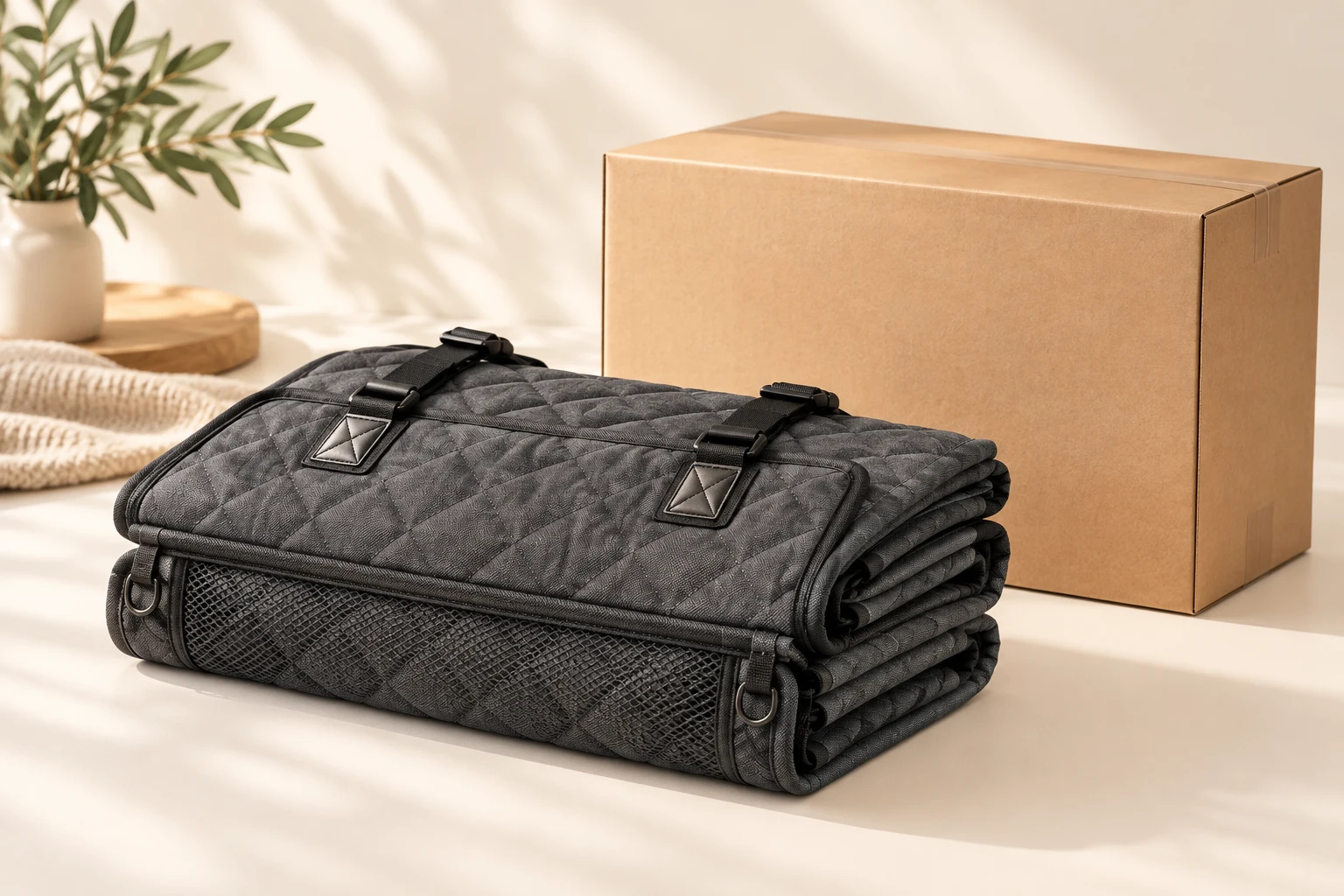
Agree the removable components, folding sequence, packed size and carton requirements. No carry bag, inserts or particular packaging are confirmed as supplied by the illustration.
Explore private-label support ↗Independent AI-generated photographs. Confirm construction, care instructions and packing contents against the actual proposed sample.
BEFORE PRODUCTION
Measure the rear-seat area and headrest fixing points.
Confirm base material, removability and a documented load test.
Check access to seat belts and cleaning instructions.
A soft hammock conforms to the seat and may sag over the footwell. A rigid base can create a more continuous surface when the installed panels are properly supported. Measure seat width and usable depth, the unsupported span above the footwell, headrest spacing and buckle positions. Try the split-seat positions the customer needs and check that required buckles stay accessible. Panel material, thickness, joints and unsupported span all affect flex. Compare the dog's standing footprint with the supported area and require evidence for any load limit.
A paw can slide on the top fabric while the cover stays put. The whole cover can also shift against the seat. Check both on the intended upholstery with the fasteners installed. Ask whether the boards can be removed and reinserted in a predictable order. That can simplify cleaning and compact storage. Remove loose dirt first, follow the care instructions for each component and dry everything before refitting. Install, remove and fold the sample and record packed dimensions and assembly steps.
BUYER FAQ · RECENT OWNER QUESTIONS
Recent questions focus on the gap between advertised load ratings and real support, compact rear-seat fit, door coverage, washable construction and storage. The buying decision is best resolved with a measured fit check and model-specific sample evidence.
No load capacity or sag-resistance performance is confirmed for this concept. Share the intended dog size and request the proposed base material, supported span, fixing details and documented load test. An advertised rating on another product cannot be transferred to this one.
Universal fit is not confirmed. Supply bench width and depth, the seat-to-seat gap and headrest geometry. Compare the proposed pattern, side-panel reach and strap adjustment with an actual vehicle before approving the model.
No. This page describes a seat-protection and support concept, not a crash-tested restraint. No crash-safety certification is confirmed. Review a separate suitable restraint arrangement and whether the installed cover leaves the required access clear.
Machine-washing is not confirmed. Ask whether the rigid panels are removable and request care instructions for the fabric, coating, mesh, straps and hardware. Agree the cleaning and drying process for the final model.
No ventilation, scratch-resistance or complete hair-containment performance is verified. Review the mesh placement, actual side coverage and vehicle access points against your requirements. The concept image is not a coverage or performance test.
Packed dimensions, weight, folding method and any carry bag remain unconfirmed. Include storage limits in your inquiry and evaluate the proposed sample after removal, including its rigid panels and straps.
Ask for a test report identifying the panel revision, installed support points, load placement, duration or cycles, and failure criteria. A stationary support test addresses the tested load and installation. Crash protection requires separate evidence for the complete restraint system, including how it attaches in the vehicle.
YOUR NEXT PET COLLECTION
Share your market, quantities and model-specific requirements.

LET’S BUILD SOMETHING GOOD
Share your market, quantities and product requirements.
Start your inquiry ↗