
Define the whole footprint.
Measure the cargo floor, seatbacks, sidewalls and bumper flap, including the seats-up or seats-down layout.
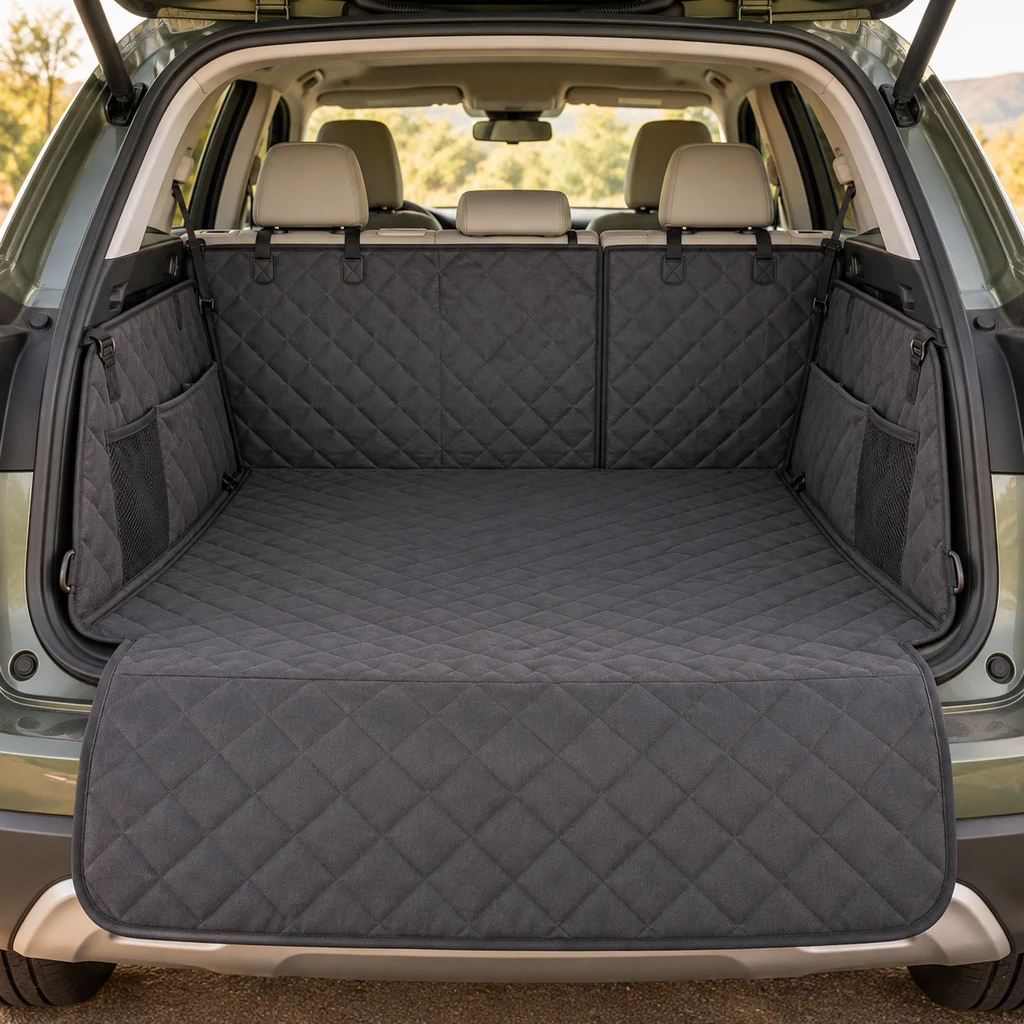
Product concept · actual configuration requires confirmation
Travel & Transport · B1
A considered cargo-space layer.
Built around the vehicle you specify.
Explore a cargo liner direction with side coverage and a fold-out bumper flap. Start with the boot layout, attachment surfaces and care needs for your buying program.
AI-generated concept photography throughout. Images illustrate design, use and packaging directions, not confirmed supplied models, performance or included accessories.
DESIGNED AROUND THE BRIEF
Cargo layouts change with the vehicle and seat position. Floor coverage, side panels and the tailgate edge need separate measurements.
Measure the cargo floor, seatbacks, sidewalls and bumper flap, including the seats-up or seats-down layout.
Review backing and attachment methods against the actual carpet, plastic trim or existing cargo mat.
Discuss hair removal and cleaning, then request evidence for any water or wear performance you need.
SPECIFICATION DISCUSSION
Review these points against a proposed model. The concept photography does not establish final materials, dimensions, availability or performance.
| Product concept | Cargo liner with side protection and bumper flap |
|---|---|
| Dimensions | Provide cargo floor, sides and bumper coverage requirements |
| Material and backing | Confirm composition, coating and grip construction |
| Water resistance | Specify the required performance and test evidence |
| Branding and colors | Discuss against the proposed supply option |
| MOQ, price and timing | Confirmed for the proposed model after your inquiry |
IN THEIR EVERYDAY
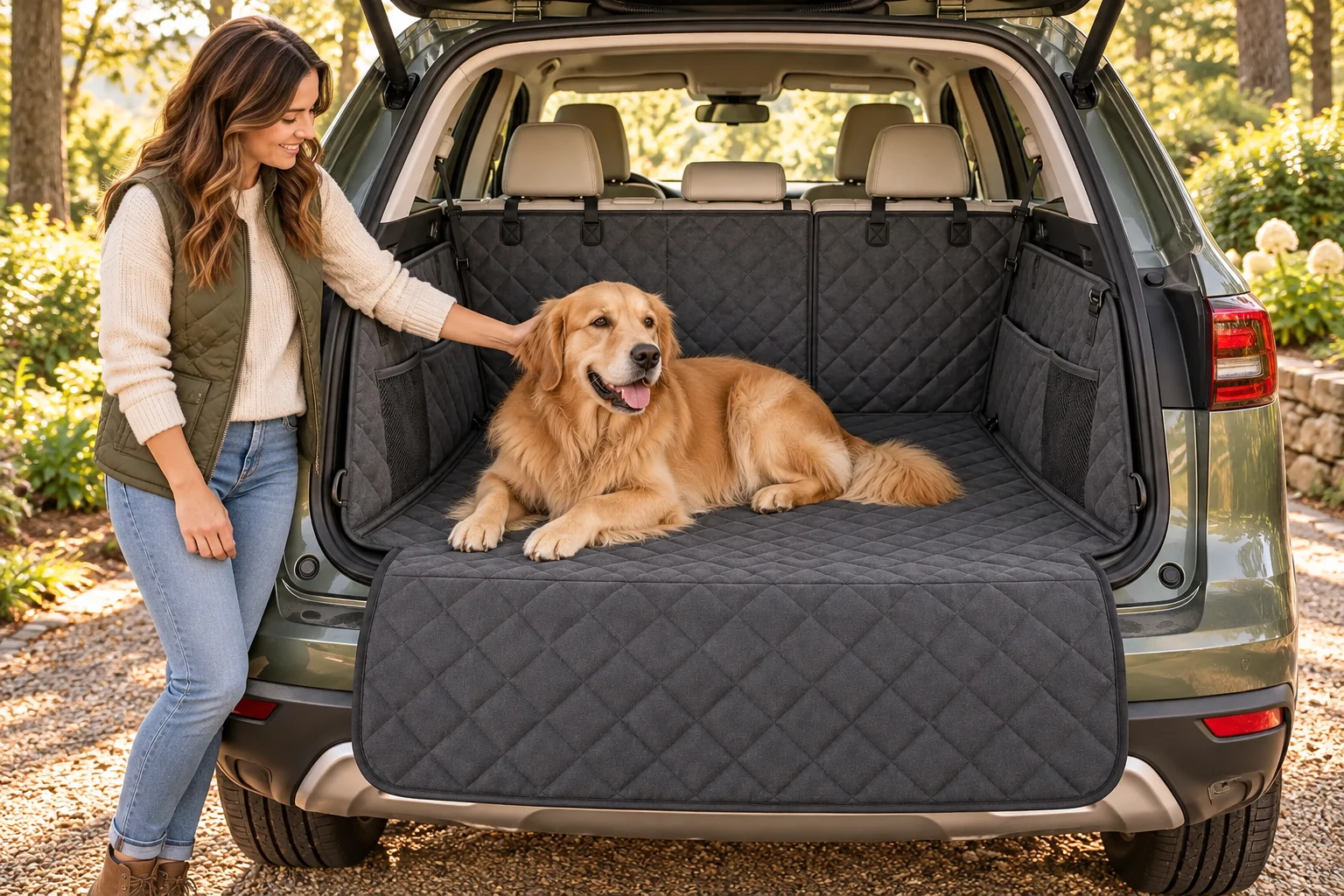
A parked-vehicle scene shows the intended cargo-area format. The liner is a protection layer; any separate pet restraint, crate or travel setup must be considered independently.
Illustrative use setting. Pets, vehicle, tray and other contextual accessories are not included as part of a confirmed supply offer.
CLOSER TO THE PRODUCT
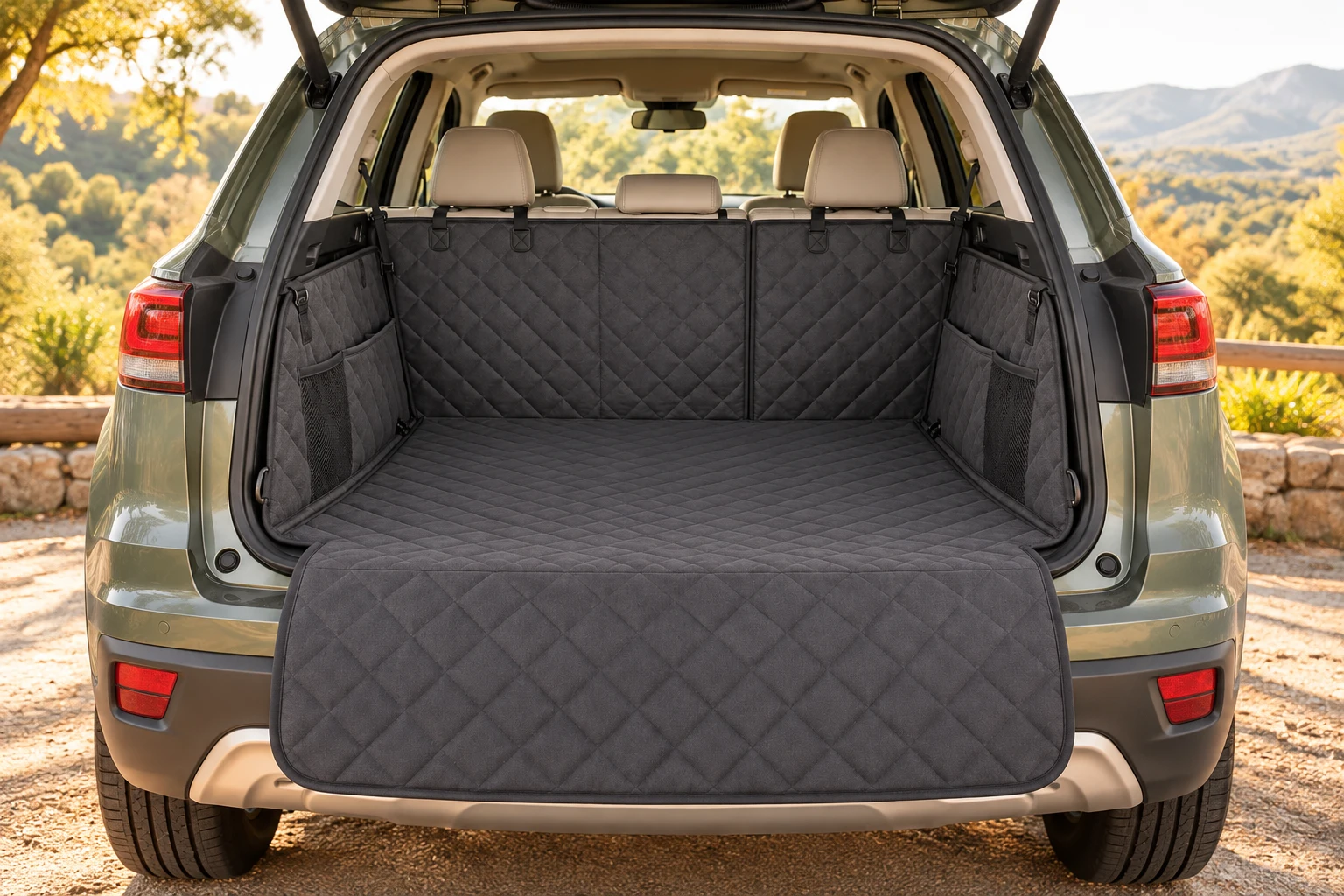
Confirm flap length, sidewall height and access to tailgate fittings. Check whether exposed edges or seat hinges remain outside the proposed pattern.
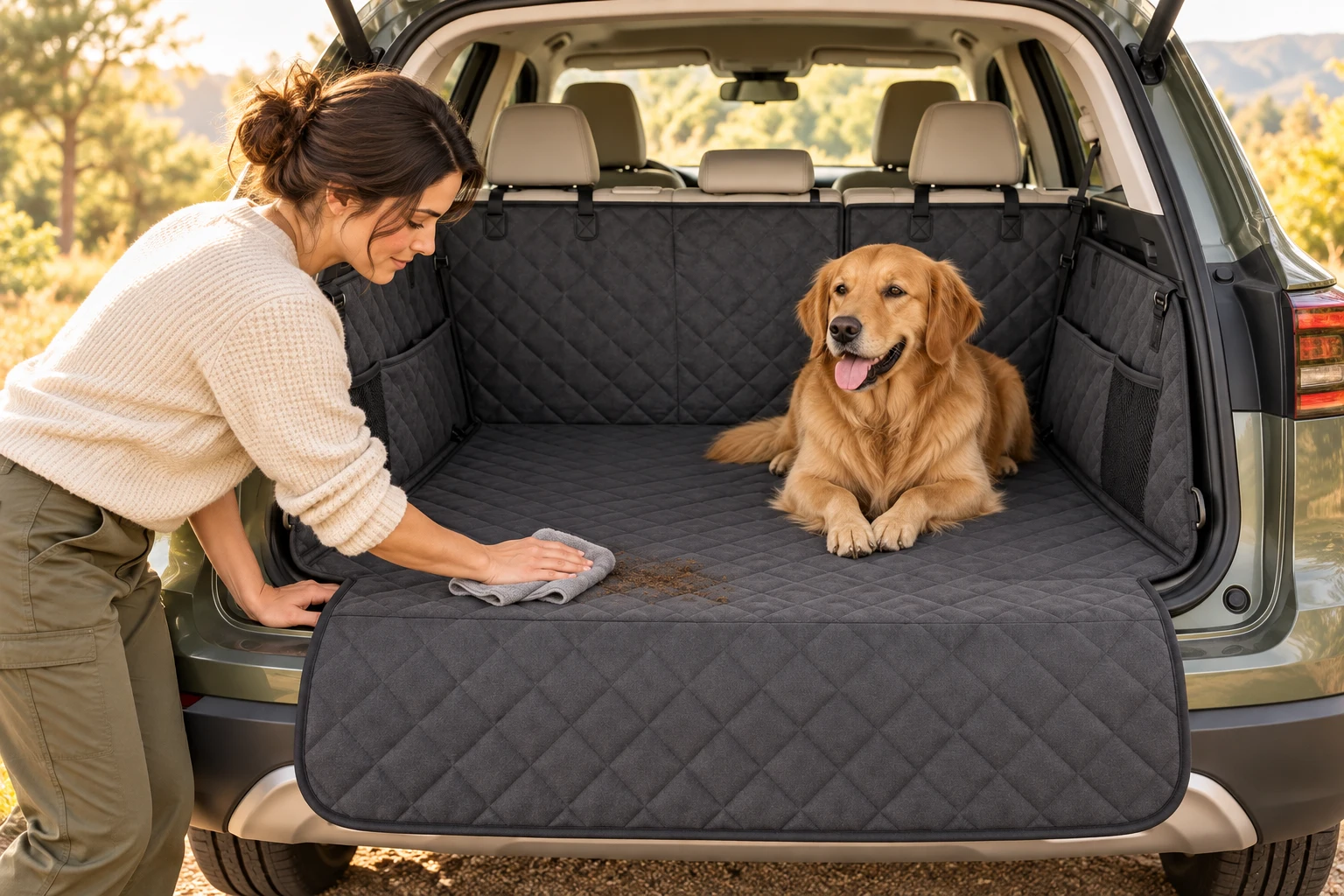
Ask about surface cleaning, backing and seam care. A wipe-down illustration does not confirm machine washing, stain resistance or waterproof seams.
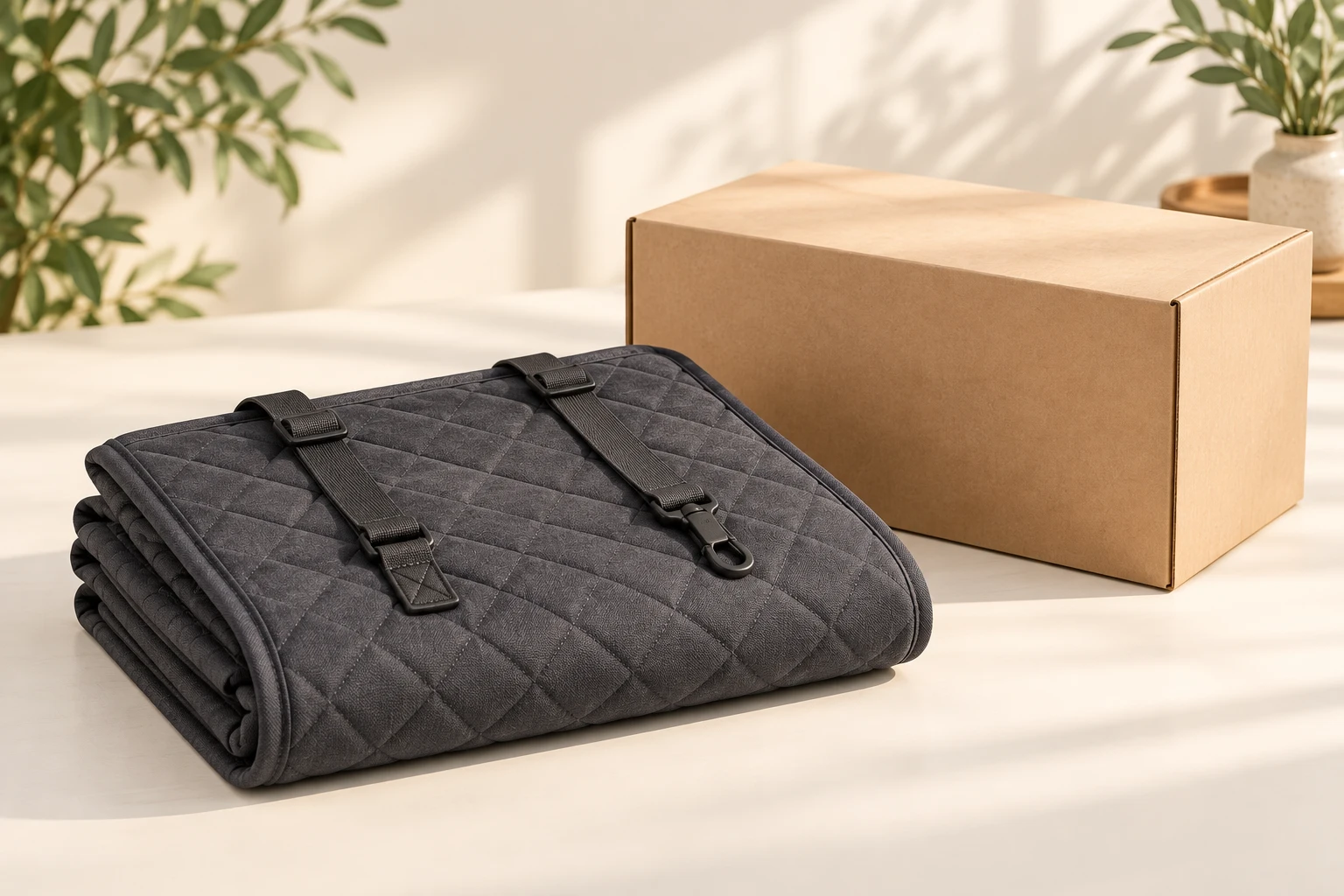
Agree unit packing, fold marks, logo placement and carton configuration after confirming the vehicle layout. The plain carton is a presentation direction, not a supplied-content promise.
Explore private-label support ↗Independent AI-generated photographs. Confirm construction, care instructions and packing contents against the actual proposed sample.
BEFORE PRODUCTION
Request dimensions for base, backrest, sides and bumper flap.
Confirm attachment method and grip on different boot linings.
Separate water-repellent fabric from waterproof seam claims.
With the vehicle parked, measure from the closed hatch line to the seatbacks, then across the narrowest point between the wheel arches and across the widest floor section. Measure sidewall height where coverage matters and note anchor locations, cargo rails and the loading lip. Repeat with the rear seats folded and record the change in length, steps and gaps. Send the model year, body style, seat layout, dimensioned photos and desired coverage with a customization brief. Confirm the pattern against a fitted sample before ordering.
A fold-out flap can cover the loading edge during entry and exit. Check its drop and width, then fold it away clear of the latch before closing the hatch. Brush or vacuum dry hair and grit first, blot moisture, and clean and dry both faces according to the sample care instructions before refitting. A face fabric that sheds splashes can still pass liquid at stitching or let it run over uncovered edges. Persistent damp beneath the liner can cause odors even when the top feels dry.
BUYER FAQ · RECENT OWNER QUESTIONS
Owners compare vehicle-specific floor and seatback fit, a surface that stays in place, side coverage and easier cleanup after muddy trips. Some report hair escaping the edges, so the final layout needs to be assessed rather than described as total containment.
That depends on the final pattern and attachment arrangement. Provide both cargo layouts, seatback lengths and hinge locations if you need both modes. No split-seat or fold-down compatibility is confirmed for this concept.
Grip for paws and grip against the vehicle floor are separate checks, and neither is verified here. Request the proposed face fabric, backing and fixings, then assess a sample on the intended boot surface.
Complete hair containment is not confirmed. Side-panel reach, gaps and the dog’s movement affect where hair can go. Review floor, side and seatback coverage and plan for access to the areas around the edges.
No waterproof performance is confirmed. Specify whether you need water-repellent fabric, waterproof seams or a defined containment test, and request evidence for the actual liner construction rather than relying on its quilted appearance.
Flap length and tailgate clearance require vehicle-specific confirmation. Measure the bumper edge and review the installed sample with the hatch open and before closing it. No universal bumper coverage or scratch-prevention guarantee is listed.
Machine-washing and drying methods remain unconfirmed. Request instructions for the final face fabric, coating, backing and attachments. Confirm how hair and grit are removed and evaluate the sample after the agreed care process.
Install it in the intended vehicle with the seats upright and folded. Note uncovered areas, tug each attachment and check whether the liner creeps when pushed across the floor. Photograph the seams, bound edges and flap with a ruler. Confirm fabric and backing with the supplier and, where a liquid-resistance claim is proposed, request evidence for the assembled liner as well as the fabric.
YOUR NEXT PET COLLECTION
Share your market, quantities and model-specific requirements.

LET’S BUILD SOMETHING GOOD
Share your market, quantities and product requirements.
Start your inquiry ↗