
Follow the way the cat exits.
Specify the available floor space and mat footprint around the tray opening.
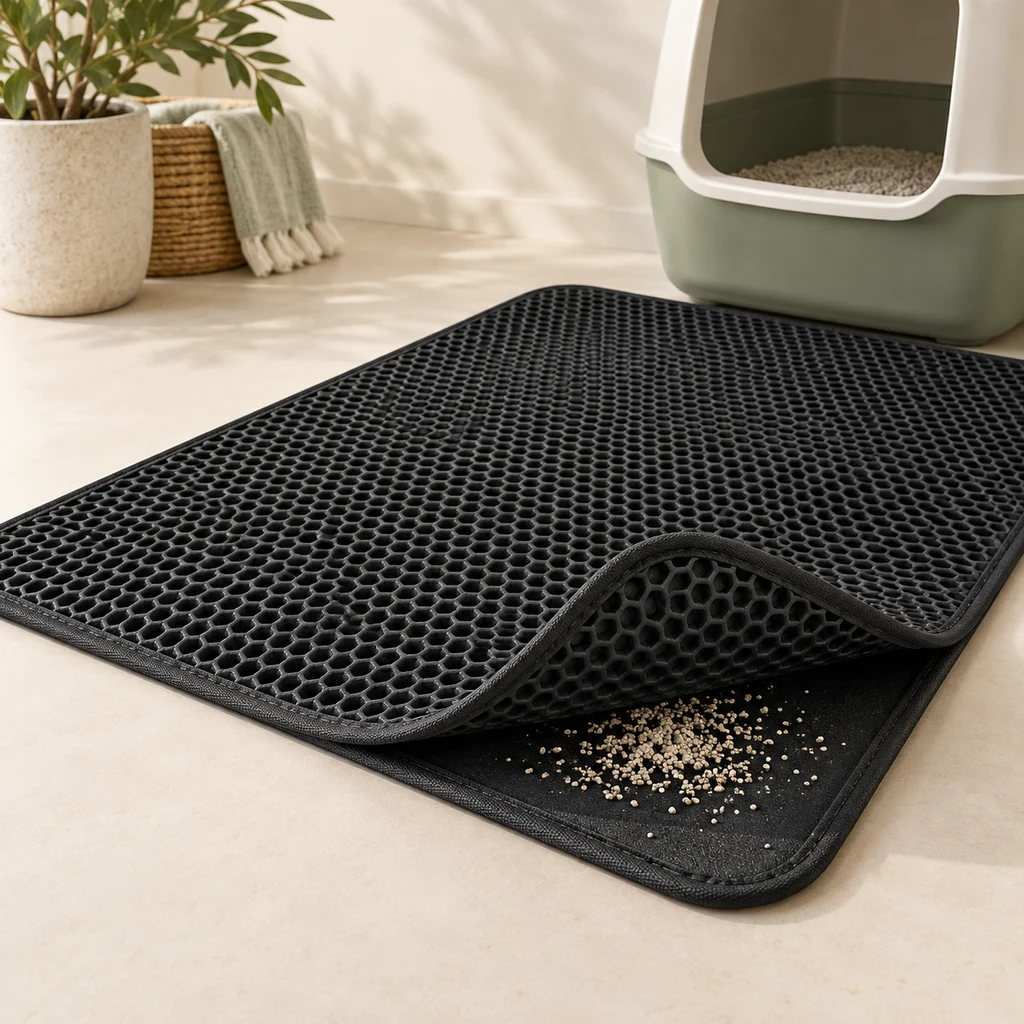
Product concept · actual configuration requires confirmation
Litter & Waste Care · E1
A more considered landing area.
A clearer cleanup conversation.
A two-layer honeycomb mat direction for collecting scattered litter near a tray. Define the exit route, footprint and access for emptying before choosing a model.
AI-generated concept photography throughout. Images illustrate design, use and packaging directions, not confirmed supplied models, performance or included accessories.
DESIGNED AROUND THE BRIEF
Litter collection is only one part of the decision. Placement, texture, backing and cleaning access also need to match the actual setup.
Specify the available floor space and mat footprint around the tray opening.
Check how granules reach the lower layer and how that layer is accessed for emptying.
Confirm care instructions for the final material, binding and backing; no liquid containment is implied.
SPECIFICATION DISCUSSION
Review these points against a proposed model. The concept photography does not establish final materials, dimensions, availability or performance.
| Product concept | Double-layer honeycomb litter-collection mat |
|---|---|
| Material | EVA can be requested; final composition to confirm |
| Size preferences | 45 × 60 cm and 55 × 76 cm can be included in your brief |
| Color preferences | Specify neutral or custom colors for quotation |
| Grip and care | Confirmed for the proposed backing and sample |
| MOQ, price and timing | Confirmed for the proposed model after your inquiry |
IN THEIR EVERYDAY
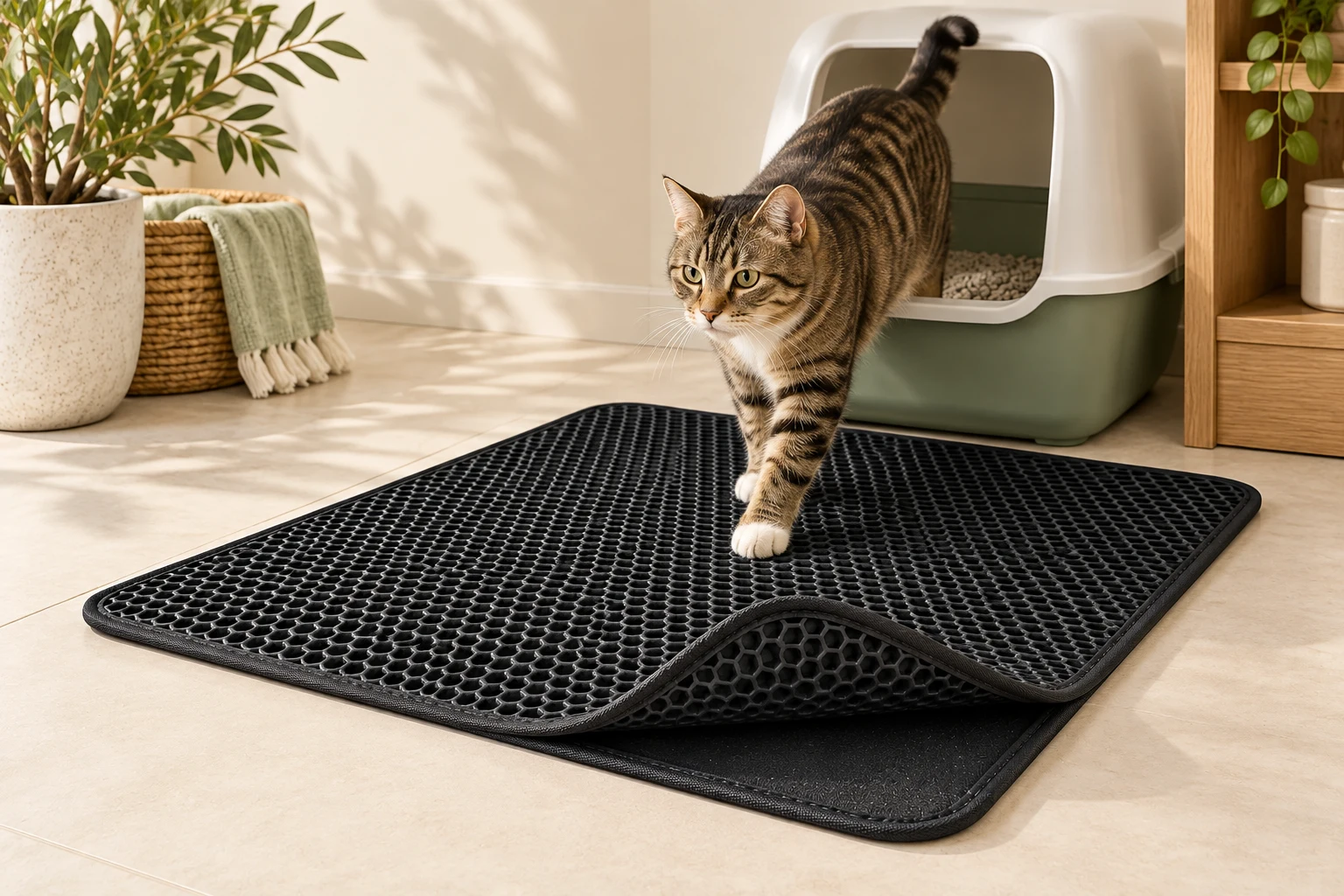
A clean home corner illustrates placement. The tray is a contextual accessory; the mat’s final size, material and collection performance still require confirmation.
Illustrative use setting. Pets, vehicle, tray and other contextual accessories are not included as part of a confirmed supply offer.
CLOSER TO THE PRODUCT
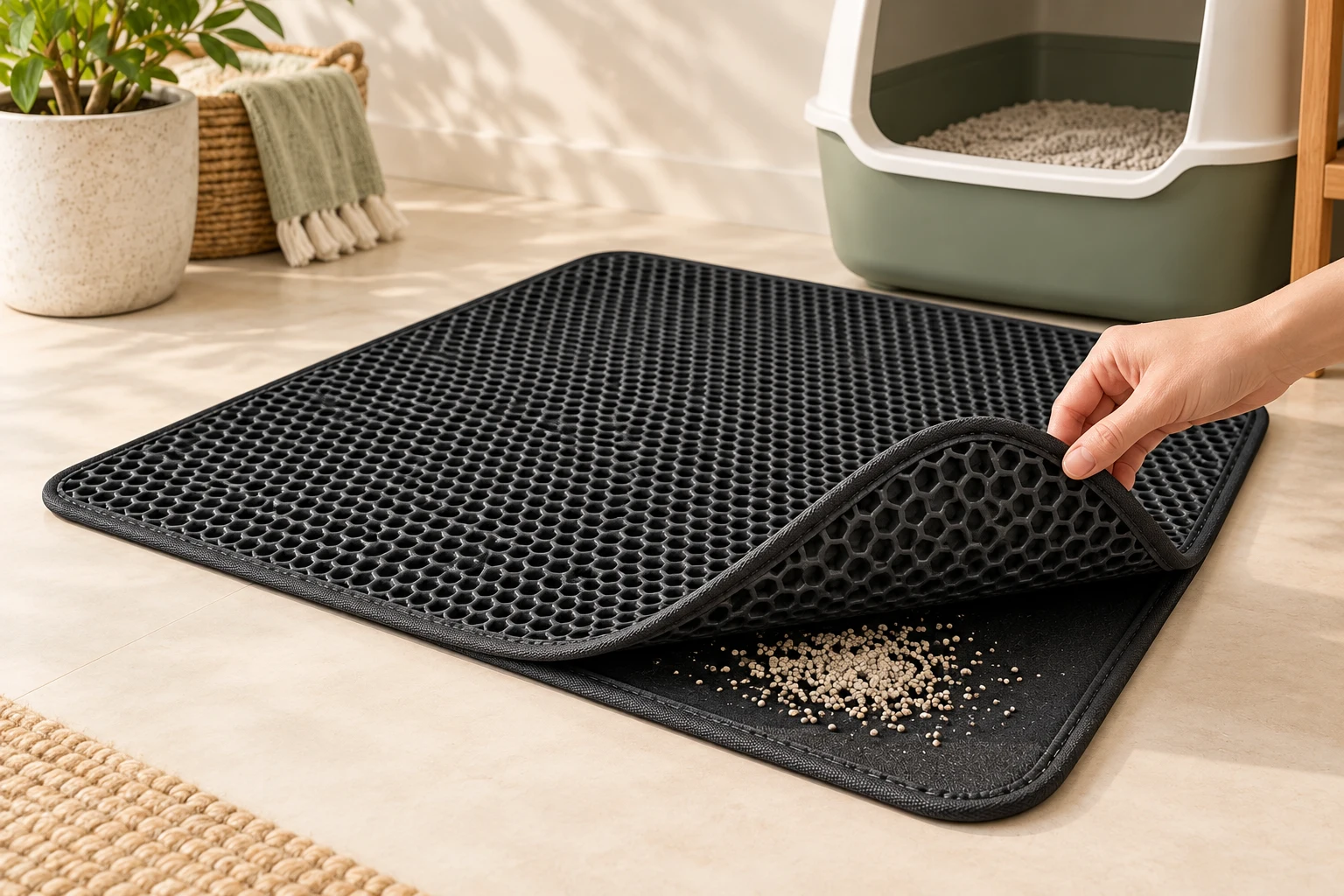
Review opening size, edge binding and access to the lower layer. The exact layer attachment and closure should be confirmed on the selected sample.
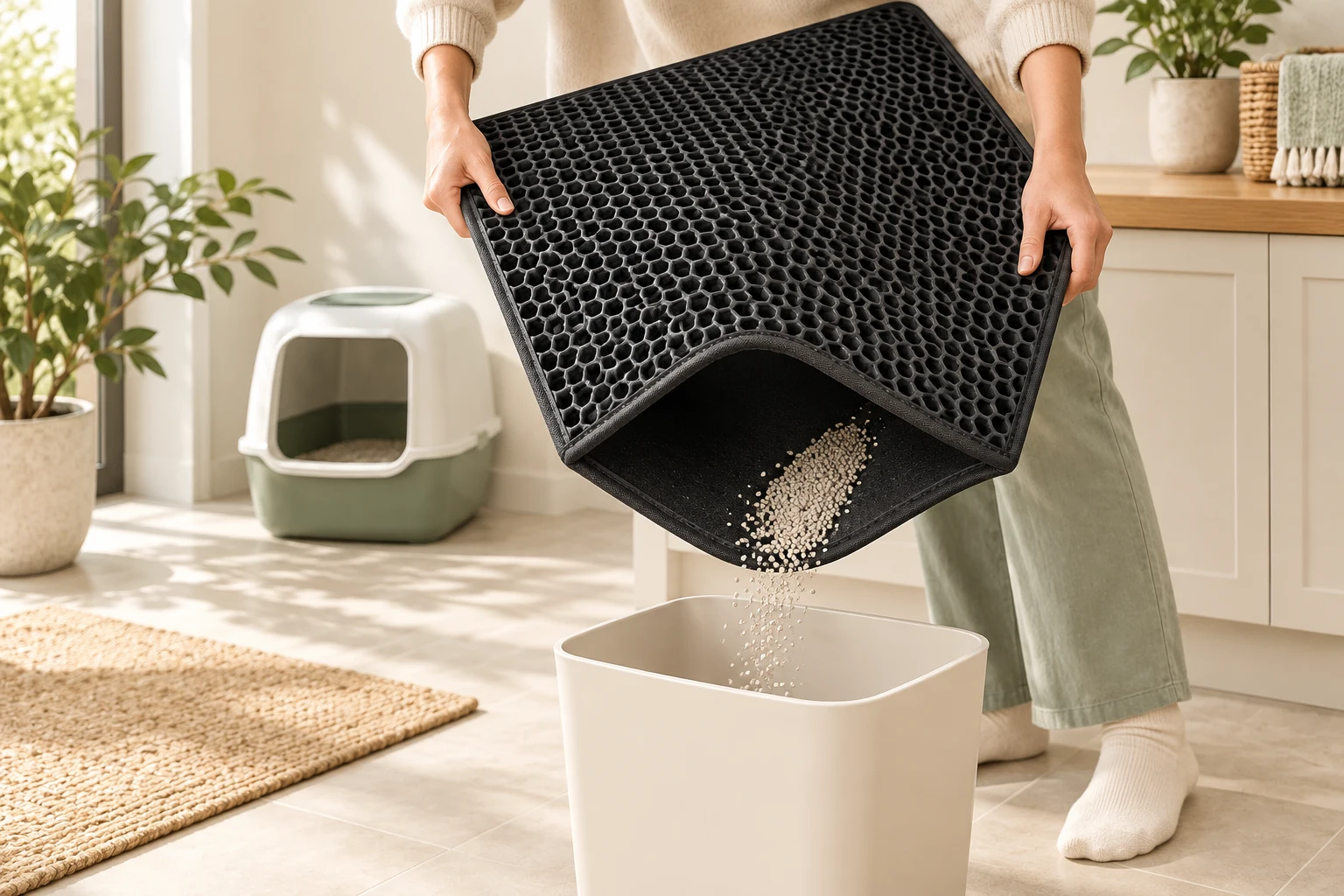
Check whether the proposed construction can be opened and emptied without losing granules at the wrong edge. Confirm wash and drying instructions; the illustration is not a cleaning test.
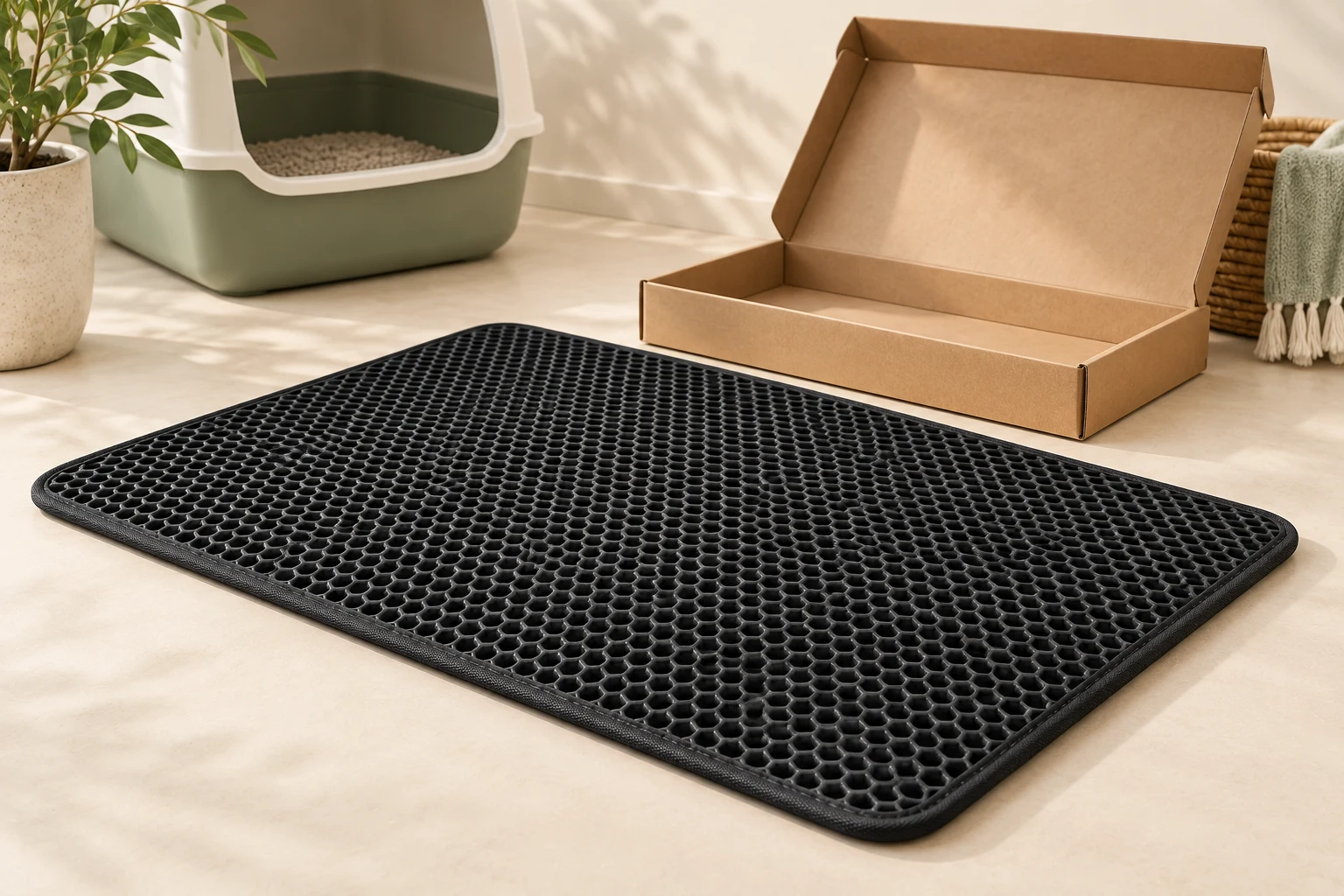
Review flat versus folded packing, creasing, odor after unpacking and carton dimensions. A flat-pack presentation is a direction to discuss, not confirmed supplied packaging.
Explore private-label support ↗Independent AI-generated photographs. Confirm construction, care instructions and packing contents against the actual proposed sample.
BEFORE PRODUCTION
Check litter collection and access for emptying.
Evaluate floor grip and performance after cleaning.
Review flat packing, creasing and odor after unpacking.
A two-layer mat lets suitable granules fall through the top into the pocket below. A single layer collects them on its surface. Fine litter can pass through smaller openings. Larger grains or long pellets can bridge across holes, so shake the buyer's actual litter over the sample and compare what reaches the pocket. Measure the cat's exit route from the tray and cover the first few steps where space permits.
Tip dry granules from the pocket opening into a waste container or back into the tray if clean and suitable for reuse. Clear debris before washing. If urine enters the pocket, remove the mat and absorb the liquid, then clean both layers and edges as the sample instructions allow. Leftover litter and trapped moisture can cause odors. Leave the layers open where possible and dry the inside and underside before replacing the mat.
BUYER FAQ · RECENT OWNER QUESTIONS
Recent discussion activity addresses daily litter cleanup, two-layer collecting surfaces and mats that cats move. It points to footprint, opening access and placement as useful checks, while leaving any collection rate, waterproofing or floor-grip claim to the actual model.
No collection rate or complete tracking-prevention performance is confirmed. Review a sample with the intended litter granule size, the tray layout and the cat’s exit route. The concept image cannot establish how much litter will be collected.
Measure the available landing area and how the cat leaves the box. The 45 × 60 cm and 55 × 76 cm sizes in the sourcing brief are preferences to request, not confirmed inventory. Compare the actual footprint with the space before ordering.
Access and closure design remain model-specific. Request a sample to check which edge opens, whether the layers separate and how granules leave the lower layer. Do not assume the final mat uses the same fastening as a Reddit user’s product.
Floor-grip and scratch-resistance performance are not confirmed. Ask for the proposed backing and thickness, then assess the sample on the intended floor. A two-layer structure alone does not establish that a cat cannot move it.
Washing method and drying time are unconfirmed. Request care instructions for the actual material, binding and layers, and evaluate how accessible the lower layer is after cleaning. Confirm the required drying process before reuse.
No. A lower collecting layer does not establish liquid containment, sealed edges or a waterproof floor barrier. If those properties matter, request the proposed construction and evidence for a defined test rather than relying on the honeycomb appearance.
Record hole dimensions, pocket access, lower-layer material and edge joining. A water-repellent backing can shed a surface splash while liquid may still pass the joins or spill from the opening. With the supplier's agreed volume and dwell time, put an absorbent sheet beneath the sample and check it and the edges. Empty, clean and dry the sample to see what remains between the layers.
YOUR NEXT PET COLLECTION
Share your market, quantities and model-specific requirements.

LET’S BUILD SOMETHING GOOD
Share your market, quantities and product requirements.
Start your inquiry ↗