
Keep the shape clear.
This direction is flat and horizontal. Confirm footprint and thickness before comparing inclined or vertical alternatives.
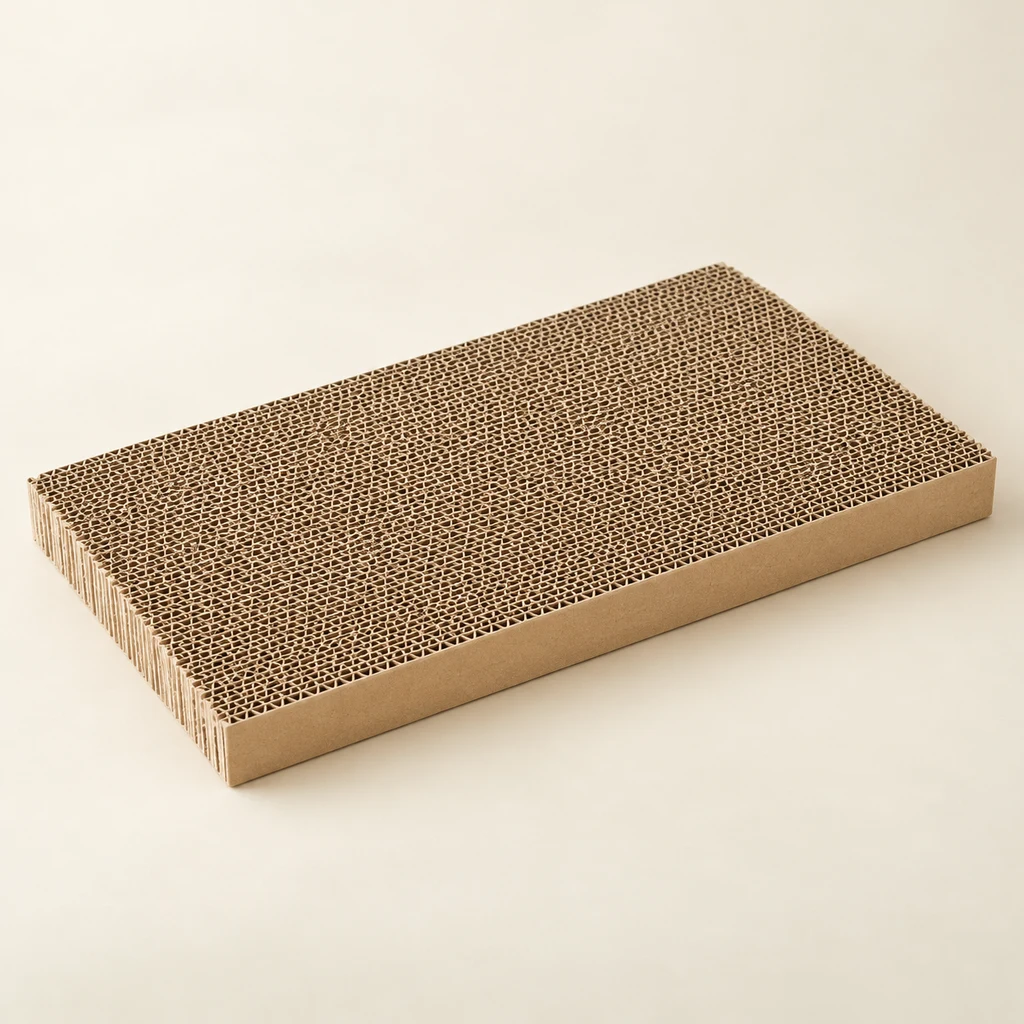
Product concept · actual configuration requires confirmation
Cat Furniture & Scratchers · D1
A simple scratching surface.
A more considered cat-care essential.
A flat corrugated-board scratching direction for everyday assortments. Review the usable footprint, paper construction, both faces and expected wear before selecting a model.
AI-generated concept photography throughout. Images illustrate design, use and packaging directions, not confirmed supplied models, performance or included accessories.
DESIGNED AROUND THE BRIEF
Shape, stability and surface wear affect the buying decision. A flat pad is a specific format, not a substitute for every cat’s preferred scratching surface.
This direction is flat and horizontal. Confirm footprint and thickness before comparing inclined or vertical alternatives.
Request paper and adhesive details and assess odor, edge finish and shedding on a sample.
Review the usable scratching area on each face and whether the proposed design can actually be turned over.
SPECIFICATION DISCUSSION
Review these points against a proposed model. The concept photography does not establish final materials, dimensions, availability or performance.
| Product concept | Double-sided flat corrugated-cardboard scratcher |
|---|---|
| Size and thickness | Discuss existing formats or a custom footprint |
| Paper and adhesive | Confirmed with the proposed specification and sample |
| Artwork and catnip | Request neutral or printed sides, with or without catnip |
| Packing | Compare unit and carton packing options |
| MOQ, price and timing | Confirmed for the proposed model after your inquiry |
IN THEIR EVERYDAY
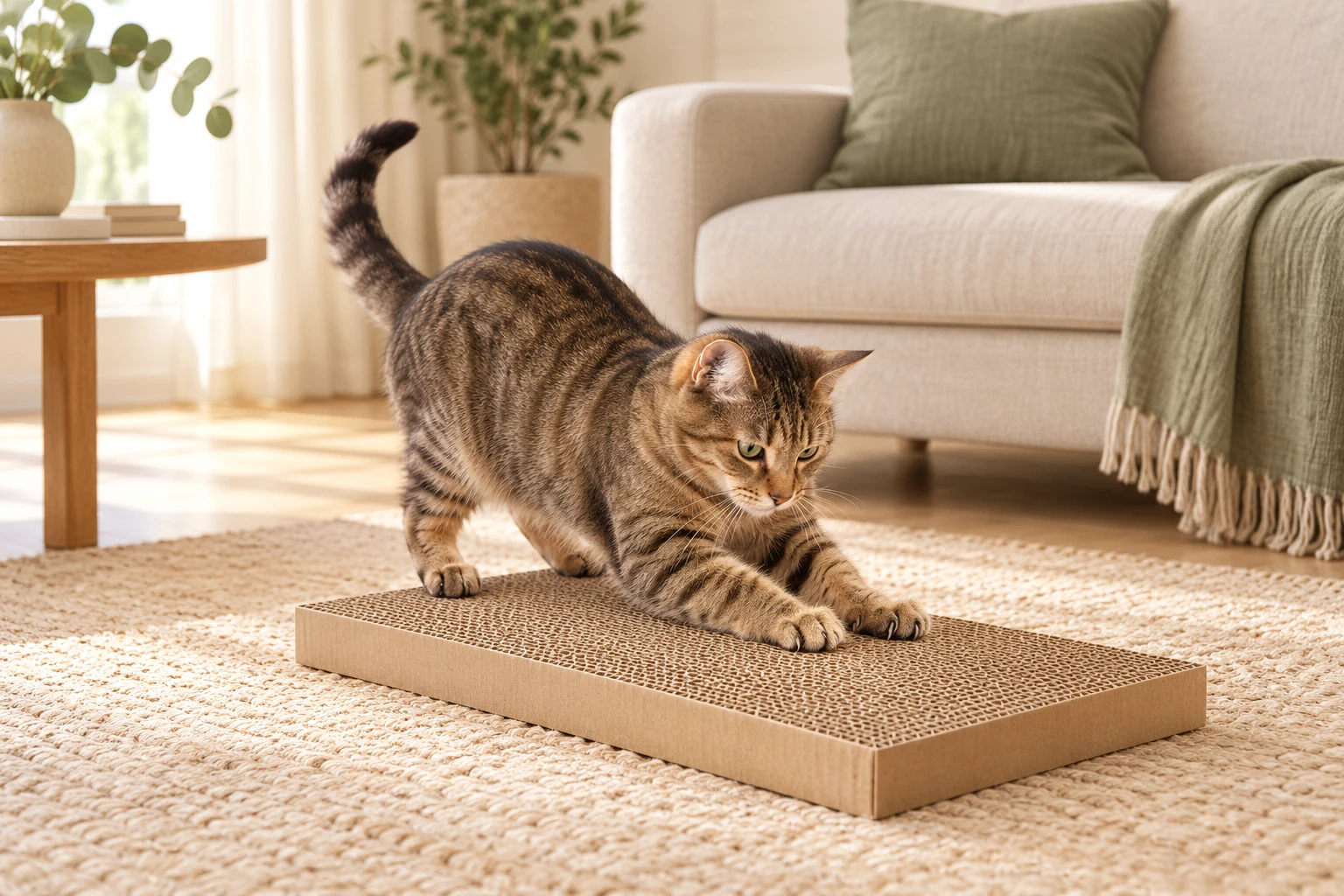
A home scene shows the horizontal scratching format. Individual preferences vary; neither cat acceptance nor protection of household furniture is guaranteed.
Illustrative use setting. Pets, vehicle, tray and other contextual accessories are not included as part of a confirmed supply offer.
CLOSER TO THE PRODUCT
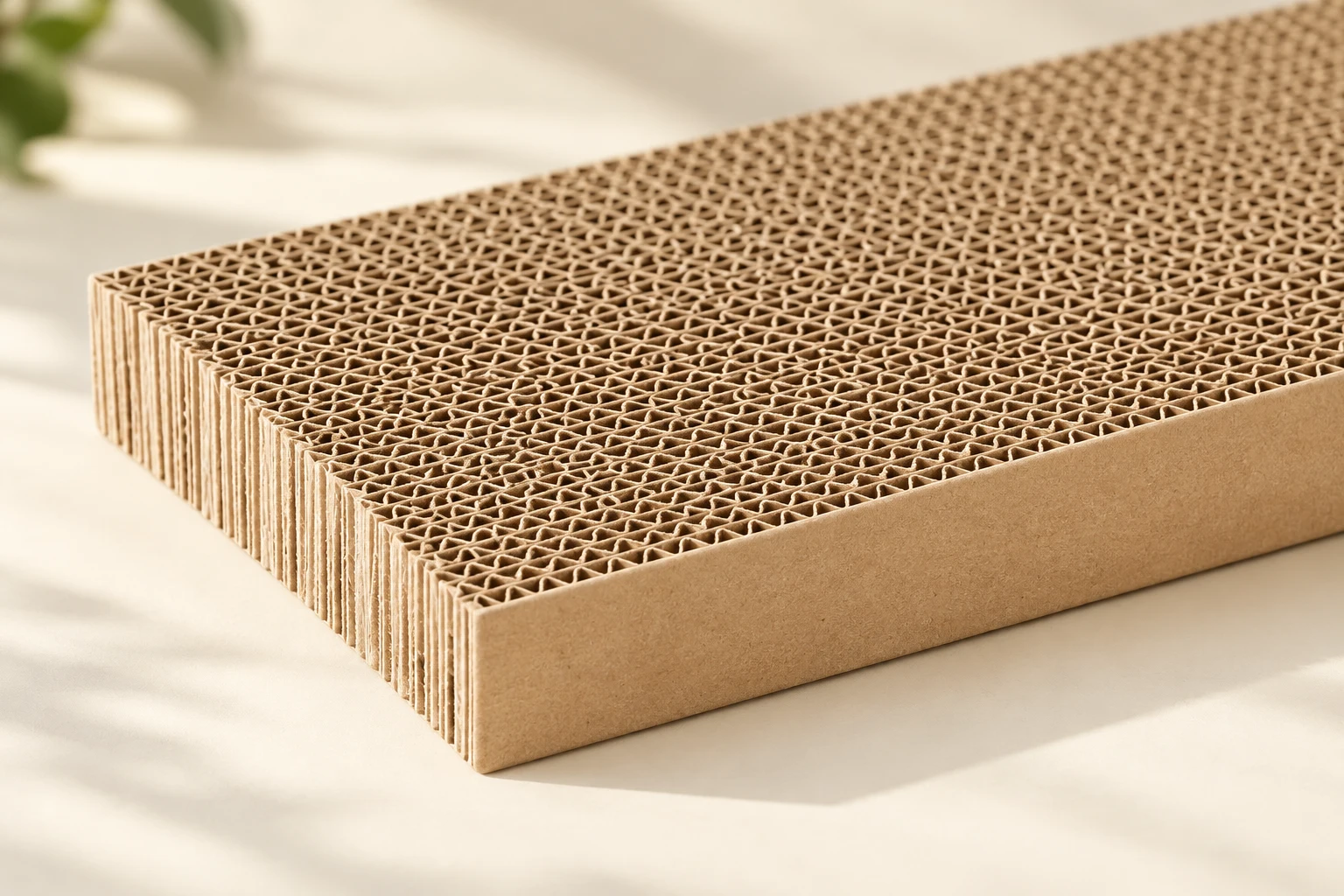
Check the actual paper layers, edge bonding, smell and loose material. No adhesive safety, recycled-content or durability claim is established by this concept photograph.
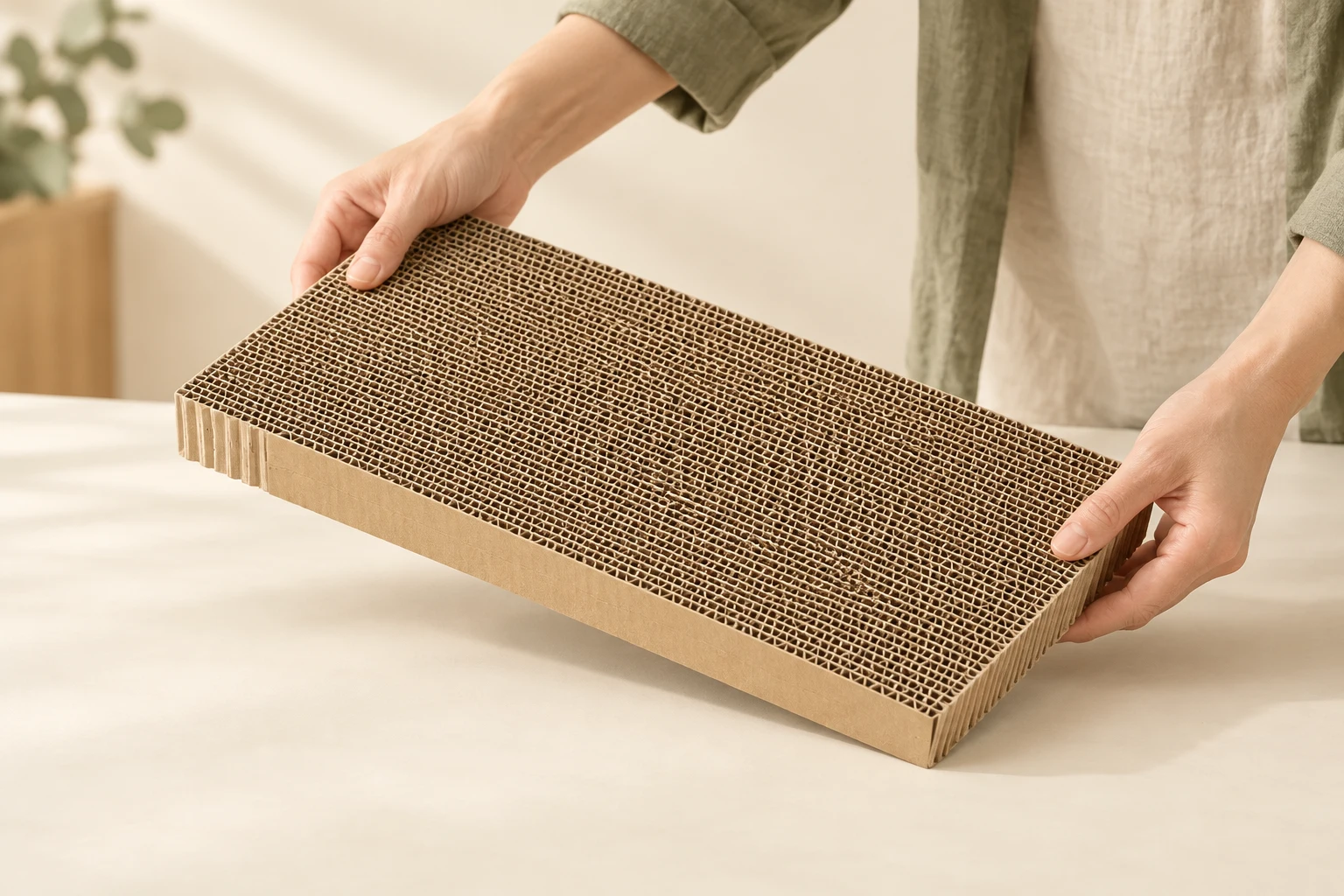
Confirm the second face is usable in the proposed construction and assess stability when reversed. Double-sided design alone does not establish how long either side will last.
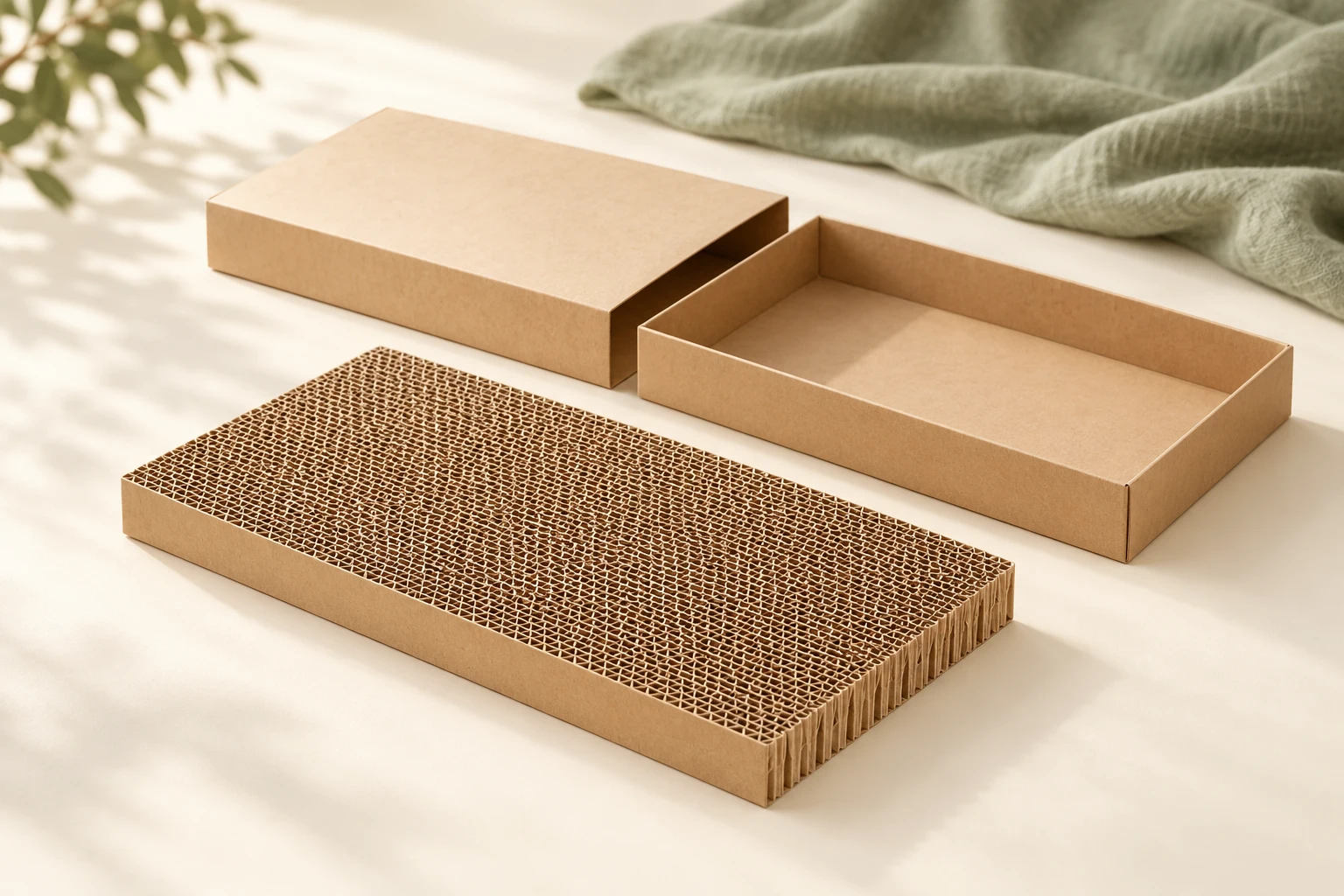
Discuss a sleeve, plain or printed sides, carton protection and any optional catnip separately. No accessory, replacement insert or supplied packaging is confirmed by the illustration.
Explore private-label support ↗Independent AI-generated photographs. Confirm construction, care instructions and packing contents against the actual proposed sample.
BEFORE PRODUCTION
Assess shedding, smell, edge finish and adhesive.
Confirm both scratching faces and any replacement-pad plan.
Review carton fill, compression and print options.
A reversible pad has two designed scratching faces. Claws pull at the corrugated edges and loosen fibers. Frequent use at one end wears that end first. Turn the pad only when both faces are designed for use and the remaining structure sits flat. Compare corrugation density and direction and choose a pad long and wide enough for the cat's scratching stance, with thickness that keeps the board from flexing excessively on the intended surface.
Sweep or vacuum loose fibers around the pad and keep the board dry. Replace it when the layers split, the board rocks or folds, or there is too little coherent surface left for the cat to scratch. Flip a worn face only if the underside is intact.
BUYER FAQ · RECENT OWNER QUESTIONS
Recent scratcher discussions highlight cats that chew rather than scratch, pads used as resting places, loose cardboard and difficulty finding the same shape again. The useful sourcing questions concern paper quality, geometry, replacement planning and realistic wear expectations.
No low-shedding or durability performance is confirmed. Request the proposed paper construction and a sample, then assess loose material, edge wear and bonding under the agreed review process. Do not transfer another owner’s reported lifespan to this concept.
No. This is a scratching-format concept, not a chew product. No ingestion-safety claim is verified. Include paper and adhesive information in your sample review and do not market the pad as suitable for chewing or eating.
That is not confirmed. This direction is flat and horizontal; an incline changes the format. Share the cat’s existing pad geometry if you need a similar replacement, and compare actual dimensions rather than the name alone.
Double-sided construction is the proposed direction, but both usable faces must be confirmed on the actual model and sample. Check the frame, adhesive layout and stability in each orientation. No fixed replacement interval is promised.
Cat acceptance and behavior are not guaranteed. The concept offers a dedicated flat scratching surface, but the photograph cannot predict how a particular cat will use it. Assess format preference before choosing it for a collection.
A replaceable insert and catnip are not confirmed as included. Ask whether the proposed construction supports a replacement pad, and quote any catnip, print or sleeve separately. Approve the packing list before an order.
Compare board thickness, adhered edges and delamination on both faces. Try handling and flipping an unpacked sample. Inspect carton corners and check sample packs after trial storage for moisture marks, warping or compression. Agree dry storage conditions and carton protection before approving packaging.
YOUR NEXT PET COLLECTION
Share your market, quantities and model-specific requirements.

LET’S BUILD SOMETHING GOOD
Share your market, quantities and product requirements.
Start your inquiry ↗